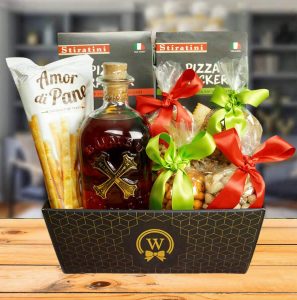
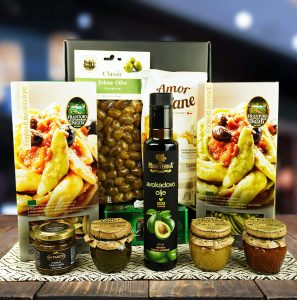
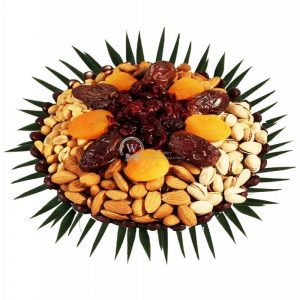
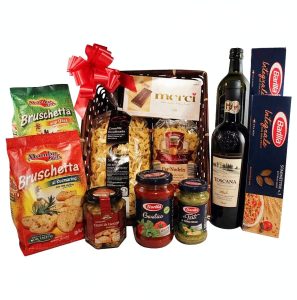
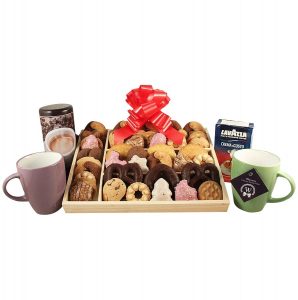
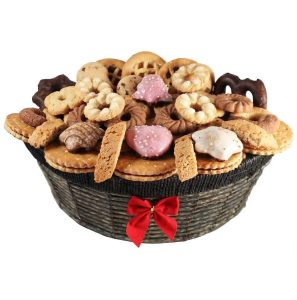
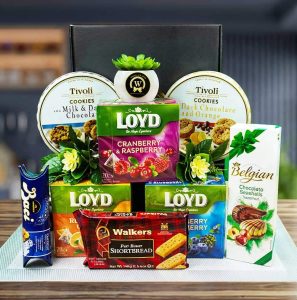
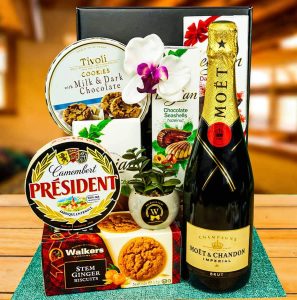
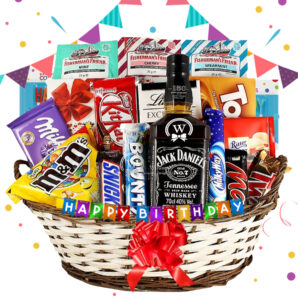
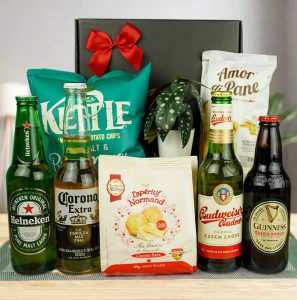
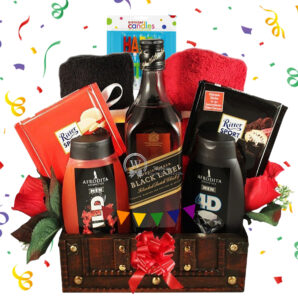
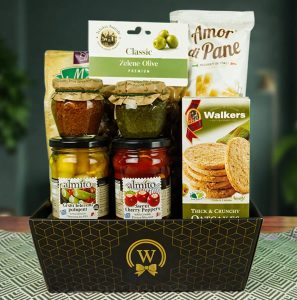
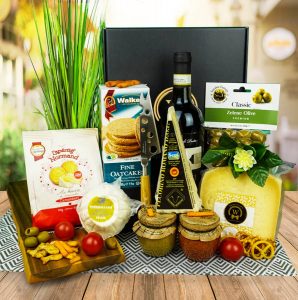
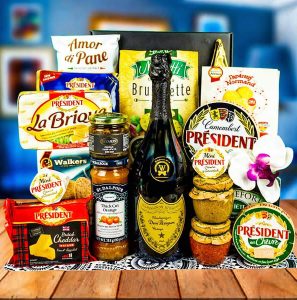
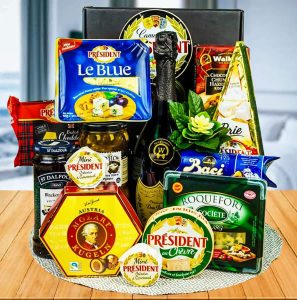
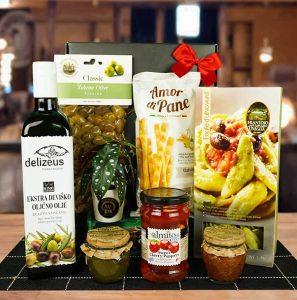
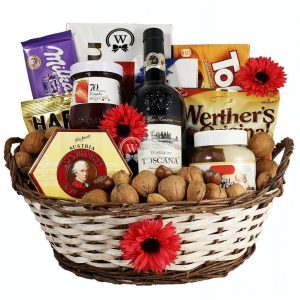
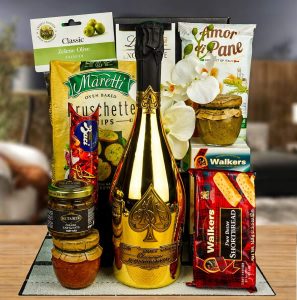
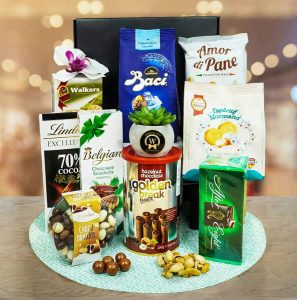
Most corporate gift baskets feel generic because they're assembled for logistics, not for the moment of opening: the same five products, no story behind any of them, packaging built for shipping rather than delight, and no connection to the recipient's country or culture. An impressive one fixes all four: genuine product quality, a clear reason for each item, presentation that feels considered, and enough regional awareness that it doesn't feel like it came from a central warehouse.
Your client opens the box. Inside: a bottle of wine they might not drink, a chocolate assortment they’ve received three times this year already, a small jar of jam with no discernible story behind it, and a cellophane bow holding it all together. They send a polite thank-you email. They forget about it by Friday. Someone spent real money and real time choosing it. This is the corporate gift basket experience for a large share of European recipients, and it doesn’t have to be.
Key Takeaways
- Generic gift baskets share a recognizable pattern: the same handful of products, no provenance, transit-first packaging, and no awareness of the recipient’s country or culture.
- Price and impression are only loosely connected. A simpler basket with a few genuinely good products often lands better than a fuller one built from anonymous branded items.
- Most generic gifting isn’t a budget problem. It’s a time-pressure and scale problem: procurement teams default to the safe, familiar choice when a deadline forces the decision.
- Presentation affects how a gift is perceived independent of what’s inside it. Consumer behavior research on gift-giving consistently finds that how a gift is presented shapes how thoughtful and valuable it’s judged to be.
- Sending the same basket to clients in different European countries is efficient but works against the goal. A basket that reflects something specific about the recipient’s region reads as more considered, even without full personalization.
- Vet any supplier, not just the one you’re currently using, against a short list of concrete questions before committing to a program.
What 'Generic' Actually Looks Like, and Why It's So Common
Generic corporate gift baskets share a recognizable set of characteristics. Understanding them makes it possible to avoid them deliberately.
The same core products, repackaged indefinitely.
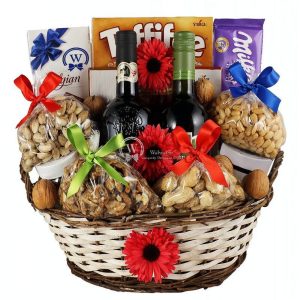
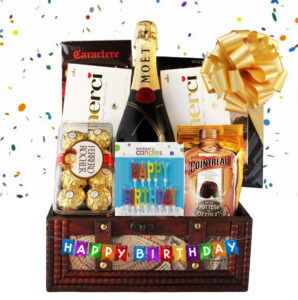
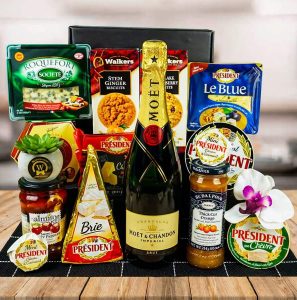
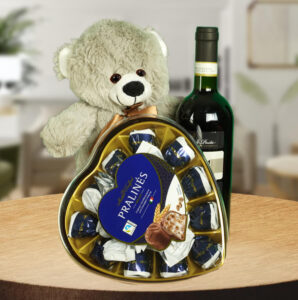
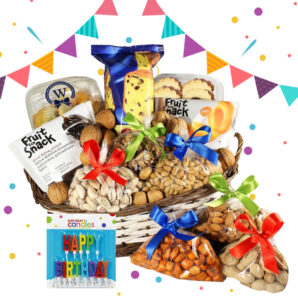
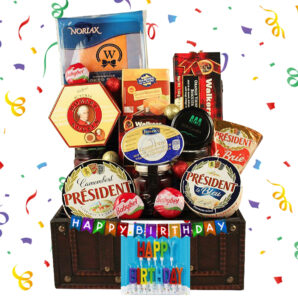
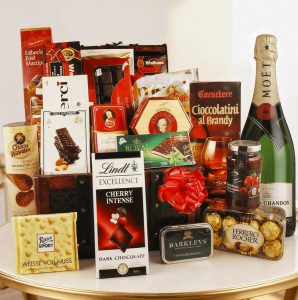
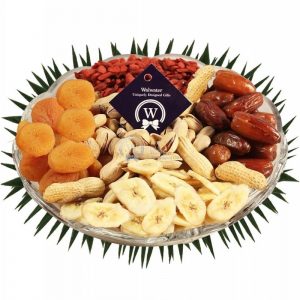
Walk through most European corporate gift catalogs, and you’ll find a familiar set: a bottle of wine or prosecco, a box of mixed chocolates, a jar of preserves, a selection of biscuits or crackers, and one item meant to justify the price point. This combination isn’t the best possible gift; it’s the most defensible one: recognizable, broadly acceptable, easy to source at scale. The problem is that a client’s other suppliers have often made the same decision. By the December gifting season, a senior European business contact may have received several versions of essentially the same basket.
Products without provenance or story
What turns a good product into a memorable gift is usually the story behind it. A jar of honey becomes interesting when there’s a specific beekeeper or region behind it. A chocolate selection becomes memorable when each piece comes from a different maker, with something explaining who made it. Generic baskets tend to strip this context out entirely. The result is a collection of anonymous products, which functions more like a hamper than a gift.
Packaging designed for logistics, not delight
The physical experience of opening a gift matters: the weight of the box, the arrangement of items, what it looks like when the lid comes off. These signals register before a card is read or a product is tasted. Consumer behavior research on gift-giving has repeatedly found that presentation shapes how thoughtful and valuable a gift is judged to be, independent of what it actually costs. A well-presented, moderately priced gift will often be perceived as more generous than an expensive one that arrives packed like a shipment rather than a gift.
No connection to the recipient’s culture or context
Europe isn’t a single market when it comes to food culture. A basket assembled with a French recipient in mind should feel different from one built for someone in Copenhagen, Lisbon, or Warsaw. Sending a basket of British products to a client in Lyon isn’t just logistically complicated, given post-Brexit customs and certification requirements; it also reads as culturally inattentive. A generic “European” basket that ignores these differences misses an easy opportunity to seem considered.
Why Generic Has Become the Default: The Procurement Problem
It’s not fair to blame procurement teams alone for the state of corporate gifting. The conditions under which most gifting decisions get made work against quality.
Time pressure and decision fatigue
Corporate gifts rarely sit at the top of a procurement manager’s list until a deadline forces the issue: a week before a client event, a fortnight before year-end, two days before a major account renewal. Under time pressure, the safe choice is the familiar one, a supplier used before, a product range already known, a price point that’s easy to justify. Quality takes deliberation. Generic scales with urgency, and urgency usually wins.
Optimizing for breadth rather than depth
When a gifting program covers dozens of recipients across several European countries, the instinct is to find one basket that works for everyone. That instinct is understandable, and it’s also the direct cause of the blandness problem. A basket designed to avoid offending anyone and accommodate every dietary and cultural variable ends up feeling distinctive to nobody.
Price anchoring to the wrong benchmark
Corporate gift budgets are usually set as a per-recipient figure. That figure becomes an anchor, and suppliers end up competing on apparent value at that price point rather than on genuine quality. A basket crammed with recognizable branded items can look full while containing nothing a discerning recipient would call good. A simpler basket built around a small number of genuinely excellent products will often create a stronger impression despite looking less abundant.
Generic vs. Impressive: What Actually Changes
Element | Generic Approach | What Works Instead |
|---|
Product selection | Same five categories: wine, chocolate, preserve, crackers, one “premium” item | A smaller number of genuinely good products, chosen for quality over shelf-filling |
Story and context | No provenance, described only as “artisan” or “premium” | A card or note that explains what makes at least one product distinctive |
Packaging | Optimized for shipping and damage prevention | Arrangement and presentation treated as part of the gift, not an afterthought |
Regional fit | One generic “European” selection sent everywhere | Some awareness of the recipient’s country or region reflected in the choice |
Scale approach | Identical basket to every recipient regardless of number | Consistent quality across volume without pretending every recipient got a bespoke basket |
Why This Matters More Than It Seems: The Return on Impressive Gifting
Corporate gifting is a form of relationship investment, and like most investments, the return depends heavily on execution.
Generic gifting has a low but predictable return. It fulfills the social obligation, generates a polite acknowledgment, and leaves the relationship exactly where it was. Impressive gifting works differently. When a gift genuinely surprises a client, when it communicates real attention to who they are, it creates a moment of positive feeling that tends to get associated with the company that sent it. People often remember how a gift made them feel longer than they remember what was in the box.
There’s a competitive angle too. If your company sends a considered, memorable gift and a competitor sends something generic, the contrast registers with the recipient even if they never articulate the comparison. Being the sender whose gift people actually mention is a real, if quiet, differentiator in relationship-driven markets.
What an Impressive Corporate Gift Basket Actually Requires
Moving from generic to genuinely impressive isn’t primarily a bigger budget question. It’s a curation and execution question.
A product selection with a reason behind it. Every item doesn’t need an elaborate backstory, but a short note on where something came from and why it’s worth attention turns a product into an introduction rather than filler.
Some regional specificity. A basket that reflects something about the recipient’s country or region reads as more considered than a generic continental selection, even without full personalization.
Packaging that creates an experience. This isn’t about expensive materials. It’s about whether the arrangement and presentation were treated as part of the gift, or purely as a logistics problem.
Basic dietary and cultural awareness. At minimum, knowing whether alcohol is appropriate and whether common dietary restrictions are accounted for changes how a gift is received.
Consistency across volume. For a program covering many recipients, the challenge is keeping quality steady, so the fiftieth basket gets the same care as the first, rather than varying with whatever was available that week.
See the corporate and business gift range
How to Vet a Corporate Gift Supplier Before You Order
- Ask what’s actually in the basket, specifically. If the answer is “artisan” or “premium” without any further detail, that’s a sign the products may be generic despite the label.
- Ask how presentation is handled. Find out whether packaging is designed around the unboxing experience or purely around surviving transit.
- Ask about regional or country-specific curation. A supplier that can explain how a basket for a French recipient differs from one for a Danish or Polish recipient is thinking about this properly.
- Confirm dietary and alcohol-free options exist as standard, not as a rare exception you have to request repeatedly.
- Ask about consistency at scale. If you’re ordering fifty or more baskets, ask directly how quality stays consistent across the batch.
- Check the delivery and substitution policy in writing. Verbal assurances are not the same as a documented policy you can point to later.
- Confirm lead times for branded or customized orders. Corporate branded orders, custom card inserts, or multi-recipient campaigns typically need extra preparation time, often one to two weeks depending on quantity, so build that into your planning.
Before Your Next Corporate Gifting Order: A Quick Checklist
- Can you name what’s distinctive about at least one product in the basket, beyond “premium” or “artisan”?
- Is there a way for the recipient to learn something about at least one item?
- Is the packaging designed to be opened and enjoyed, or is it primarily functional?
- Does the basket reflect anything specific about the recipient’s country or region?
- If you received this basket yourself, would you mention it to a colleague within the week?
- Does the supplier have a clear delivery and substitution policy?
- Can dietary requirements be accommodated without extensive back and forth?
- Will the fiftieth basket in your program get the same care as the first?
If most of these come back as “not sure,” the basket is likely to land the way most corporate gifts do: politely acknowledged and quickly forgotten.
How Walwater Gifts Approaches Corporate Gifting
Walwater Gifts, based in Slovenia, delivers gift baskets and hampers across 26 European countries. Customers can order from the US, Canada, the UK, Australia, Europe, and beyond. Because shipments to EU destinations move on intra-EU logistics rather than crossing a customs border, they generally avoid the export declarations, customs holds, and import VAT issues that can otherwise delay a shipment or land unexpected costs on the recipient.
The range includes personal, business, corporate, and seasonal gifts, with baskets and hampers built for a variety of occasions rather than a single generic template. Every order includes a customer message printed on a designed greeting card, so the gift arrives with context even when it’s shipped rather than handed over. The team can advise on options for common dietary requirements, including vegetarian, gluten-free, and alcohol-free choices, at the time of ordering.
For corporate programs, branded elements, custom card inserts, or multi-recipient campaigns generally need one to two weeks of preparation depending on quantity, so it’s worth building that lead time into your planning, particularly around busy seasons. Corporate volume orders may come with additional pricing benefits; contact the team through the corporate baskets page to discuss requirements for a specific program. Availability and exact options can vary by destination and season, so check the product page and delivery details before ordering.
Browse the corporate and business gift range
Frequently Asked Questions
Why do most corporate gift baskets feel generic?
Most are assembled for consistency and margin rather than for the recipient’s experience. Products are chosen for shelf life and ease of sourcing, packaging is built for transit, and there’s usually no story or context behind any individual item. The result looks like a gift but functions more like a fulfillment order.
Does spending more money on a gift basket guarantee a better impression?
Not automatically. The link between price and impression is weaker than most buyers assume. A basket full of anonymous branded products can cost more and still create a weaker impression than a smaller selection of genuinely good, well-presented products.
How do I make a corporate gift feel personal when I’m gifting at scale?
Work with a supplier that curates with some regional specificity rather than sending one identical basket everywhere. A basket that reflects something about the recipient’s country reads as more considered, even without individual personalization. Per-recipient customization notes are worth exploring for your highest-value relationships.
What should I look for in a European corporate gift supplier?
Look for products described with actual detail rather than just “artisan” or “premium,” some awareness of regional differences across Europe, packaging that’s treated as part of the experience, dietary options available without a lengthy back-and-forth, and a written delivery and substitution policy.
What’s a reasonable per-recipient budget for corporate gifts?
No fixed figure applies everywhere. What matters more than the number is what it buys: a smaller number of genuinely good products usually outperforms a fuller basket of generic ones at a similar or even higher price point.
Should branded merchandise be included in a corporate gift basket?
Generally, keep it minor if you include it at all. A basket built around branded items as the primary content tends to read as promotional rather than as a gift, which undercuts the impression you’re trying to create.
How can I tell if a supplier’s “artisan” or “premium” claim is genuine?
Ask for specifics. A supplier that can describe what makes a particular product distinctive, where it’s from, or what sets it apart is more credible than one that only uses the words “artisan” or “premium” as a label without detail.
How far in advance should I order for a large corporate gifting program?
Build in extra time for branded elements, custom messaging, or multi-recipient campaigns; generally, one to two weeks depending on quantity, and order earlier still around busy periods such as December.
Can I request different baskets for different countries in one order?
This depends on the supplier’s curation approach and systems. It’s worth asking directly whether regional variation is possible, since sending an identical basket to every country is easier operationally but works against the goal of feeling considered.
What if some recipients have dietary restrictions or don’t drink alcohol?
Choose a supplier that treats dietary and alcohol-free options as a standard part of the range rather than a rare exception. Confirm specific requirements at the time of ordering so the right basket reaches the right recipient.
Is it better to send one gift to a whole team or individual gifts to each person?
Both work depending on context. A shared, shareable hamper often suits a whole office or team account, while an individual gift makes more sense for a single key contact. Consider who will actually open it and in what setting.
How do I compare gift basket suppliers before committing to a program?
Run each supplier through the same short set of questions: what’s actually in the basket, how is it packaged, is there regional awareness, are dietary needs handled as standard, and is there a written delivery and substitution policy? Comparing answers side by side makes the differences easier to see than comparing price alone.
What’s the risk of sending the same gift basket to clients in different European countries?
It’s efficient, but it misses an easy opportunity to seem considered. Food culture varies significantly across Europe, and a generic “European” basket sent everywhere can read as if little thought went into any individual recipient.
Does packaging quality really matter, or is it just the contents?
Both matter, but packaging affects perception before the contents are even seen. Presentation shapes how thoughtful and valuable a gift is judged to be, so a well-presented, moderately priced gift can outperform an expensive one that arrives packed purely for transit.
Is Walwater Gifts suitable for a large corporate gifting program?
Walwater serves business accounts across 26 European countries, with a range built for personal, business, corporate, and seasonal occasions. For volume orders, branded elements, or multi-recipient campaigns, build in one to two weeks of lead time and contact the team directly to discuss the specifics of your program.