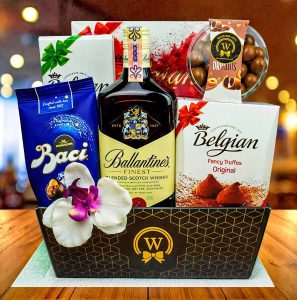
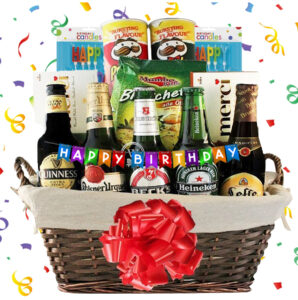
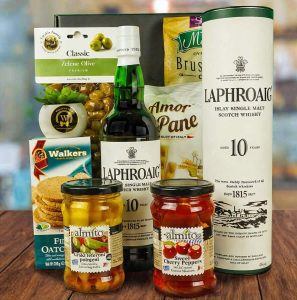
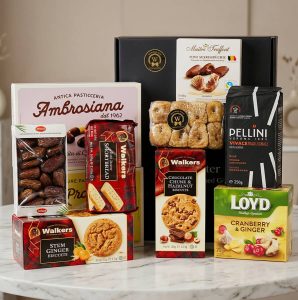
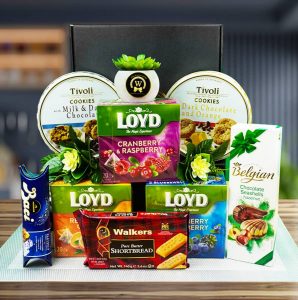
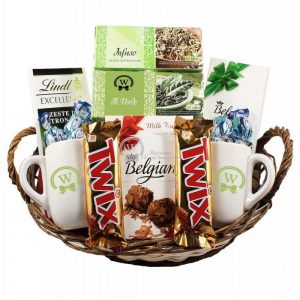
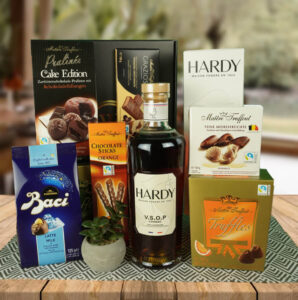
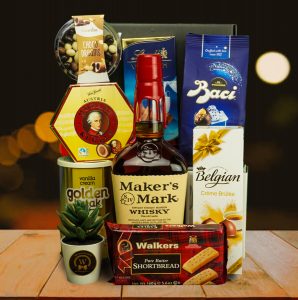
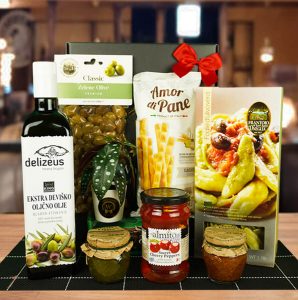
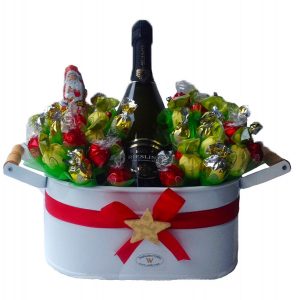
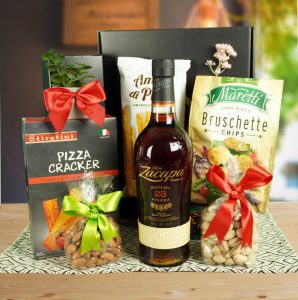
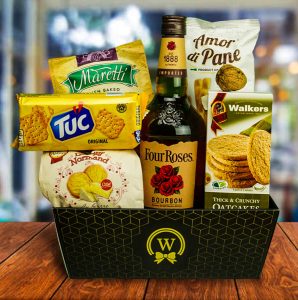
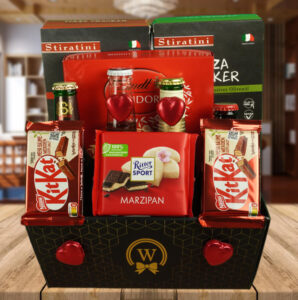
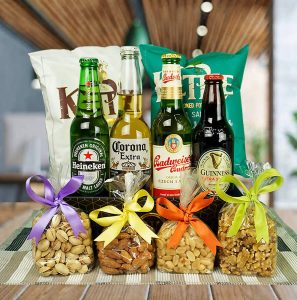
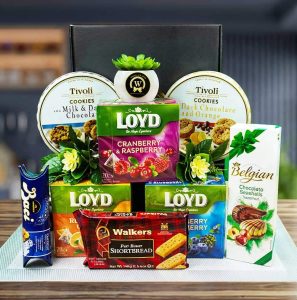
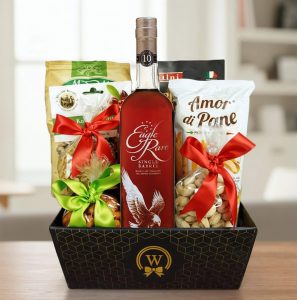
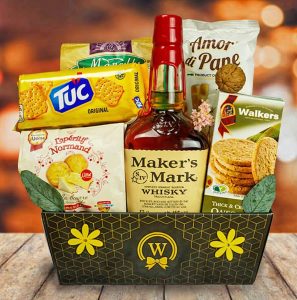
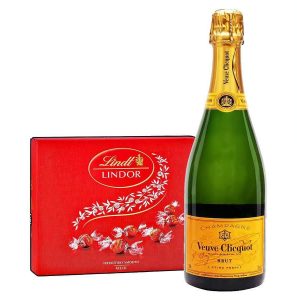
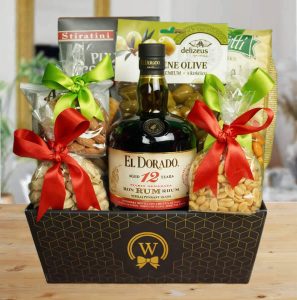
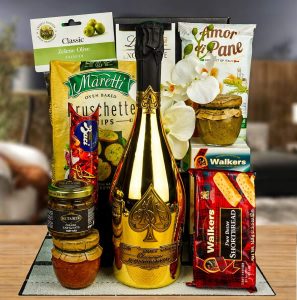
A gift basket you buy online does not qualify for the UK's private-gift customs relief, even if it is addressed as a gift, so the £39 and £135 gift thresholds do not apply. What actually matters: a non-alcohol basket priced at £135 or under should have UK VAT already included at checkout, with nothing more to pay. Above £135, or if the basket contains alcohol at any price, expect the courier to collect VAT, excise duty, or both before the parcel is released. Sending from a European-based provider to a recipient inside the EU avoids UK customs entirely.
You ordered a beautiful gift basket from Europe. Then your recipient got a card through the door, not a delivery note, but a customs payment demand. Here is what the UK actually charges on gift baskets imported from Europe, why the advice around it is so often wrong, and the one change that removes the problem entirely.
Since Brexit took effect in January 2021, the UK’s relationship with European imports changed fundamentally. The seamless flow of goods that existed under EU membership, no customs declarations, no import VAT, no duty thresholds to navigate, was replaced by a border that treats every parcel arriving from France, Germany, Italy, the Netherlands, or anywhere else in the EU as a third-country import.
For most product categories, this is a manageable inconvenience. For gift baskets, which combine multiple food products, potentially alcohol, and a range of declared values, it creates specific friction points and a lot of confusing advice online about exactly what you will be charged.
Key Takeaways
- A basket you buy and have shipped as a gift does not count as a customs “gift.” HMRC only applies the £39 and £135 gift-relief thresholds to something sent by one private person to another, unpaid.
- For a purchased, non-alcohol basket priced at £135 or under, UK VAT should already be included in the price you pay, since the seller is required to charge it at checkout. Walwater Gifts does this.
- Above £135, import VAT (and possibly customs duty) is collected by the courier at delivery instead of at checkout.
- Alcohol is excise goods. UK excise duty applies to it regardless of value, currently £26.61 to £33.99 per litre of pure alcohol depending on strength (rates effective 1 February 2026), and is generally collected by the courier rather than included at checkout.
- Many EU-made food and drink products qualify for 0% UK customs duty under the UK-EU Trade and Cooperation Agreement, provided the seller can document where the goods originated.
- Carrier handling fees (commonly £10 to £25) are separate from anything HMRC charges. They are set by the courier for processing the customs paperwork.
- The most reliable fix is not learning the thresholds. It is sending the gift from a European-based provider to a recipient who is also in Europe, which keeps the parcel inside the EU and out of the UK customs process entirely.
How UK Customs Actually Treats a Purchased Gift Basket
Most explainers on this topic, including the earlier version of this page, lead with the £39 and £135 “gift” thresholds. Here is the problem: those thresholds only apply to a genuine gift under HMRC’s definition, sent by one private person to another, not paid for by anyone in the UK, and occasional in nature. HMRC states this directly: “If you purchase something for delivery from outside of the UK as a gift for someone, it will not be treated as a gift for customs purposes. This applies even if the gift comes into the UK addressed directly to the receiver of the gift.”
A basket ordered from Walwater Gifts, or any other retailer, does not meet that definition. It is a commercial purchase, even though it is a gift in every sense that matters to the sender and recipient. So what actually applies is the standard treatment for goods bought online and sent from abroad.
Basket Type | What’s Already Included | What the Courier May Still Collect |
Non-alcohol basket, £135 or under | UK VAT, charged at checkout by the seller | Nothing, in most cases |
Non-alcohol basket, over £135 | Nothing extra at checkout | Import VAT (20%), plus customs duty if the goods do not qualify for 0% under the UK-EU trade agreement |
Basket containing alcohol, any value | VAT on the non-alcohol items only, in most cases | Excise duty on the alcohol, plus VAT on the alcohol portion, and customs duty if the total is over £135 |
Alcohol Excise Duty: The Part That Still Applies Regardless of Value
Excise duty is separate from VAT and customs duty, and it applies to alcohol whether the basket costs £20 or £200. Current UK rates, effective 1 February 2026, are £26.61 per liter of pure alcohol for drinks between 3.5% and 8.5% ABV, £30.62 per liter for 8.5% to 22% ABV (most wine and champagne fall here), and £33.99 per liter above 22% ABV (most spirits).
Two rough, illustrative examples: a standard 0.75-liter bottle of champagne at around 12% ABV contains about 0.09 liters of pure alcohol, which works out to roughly £2.76 in excise duty at the current rate. A 0.7 liter bottle of whisky at 40% ABV contains about 0.28 liters of pure alcohol, working out to roughly £9.52. Both figures are rounded and illustrative; rates change periodically, so check gov.uk for the current figures before relying on an exact number.
In practice, excise duty on a single bottle is usually smaller than people expect. VAT is normally the bigger line item. The two combined, plus a carrier handling fee, are what actually shows up on the payment demand.
The UK-EU Trade Agreement: Why Some Charges Do Not Apply
Under the UK-EU Trade and Cooperation Agreement, goods that qualify as originating in the EU move at 0% customs duty. To qualify, a product generally needs to be wholly obtained in the EU, or sufficiently processed there, and the seller needs to be able to document this.
This matters for gift baskets because a lot of what goes into them- chocolate, biscuits, wine, and other European-made goods- can genuinely qualify. It is worth asking any European gifting provider whether they claim preferential origin on their products, since it directly affects whether customs duty applies above the £135 threshold.
Carrier Handling Fees
On top of any VAT, excise duty, or customs duty, major carriers, DHL, FedEx, UPS, DPD, and Royal Mail’s Parcelforce, typically charge a customs clearance handling fee for processing the import paperwork. This commonly falls between £10 and £25, though it varies by carrier and shipment. This fee is set by the courier, not the government, and applies regardless of the value of the goods.
A Worked Example: A £150 Champagne and Chocolate Hamper
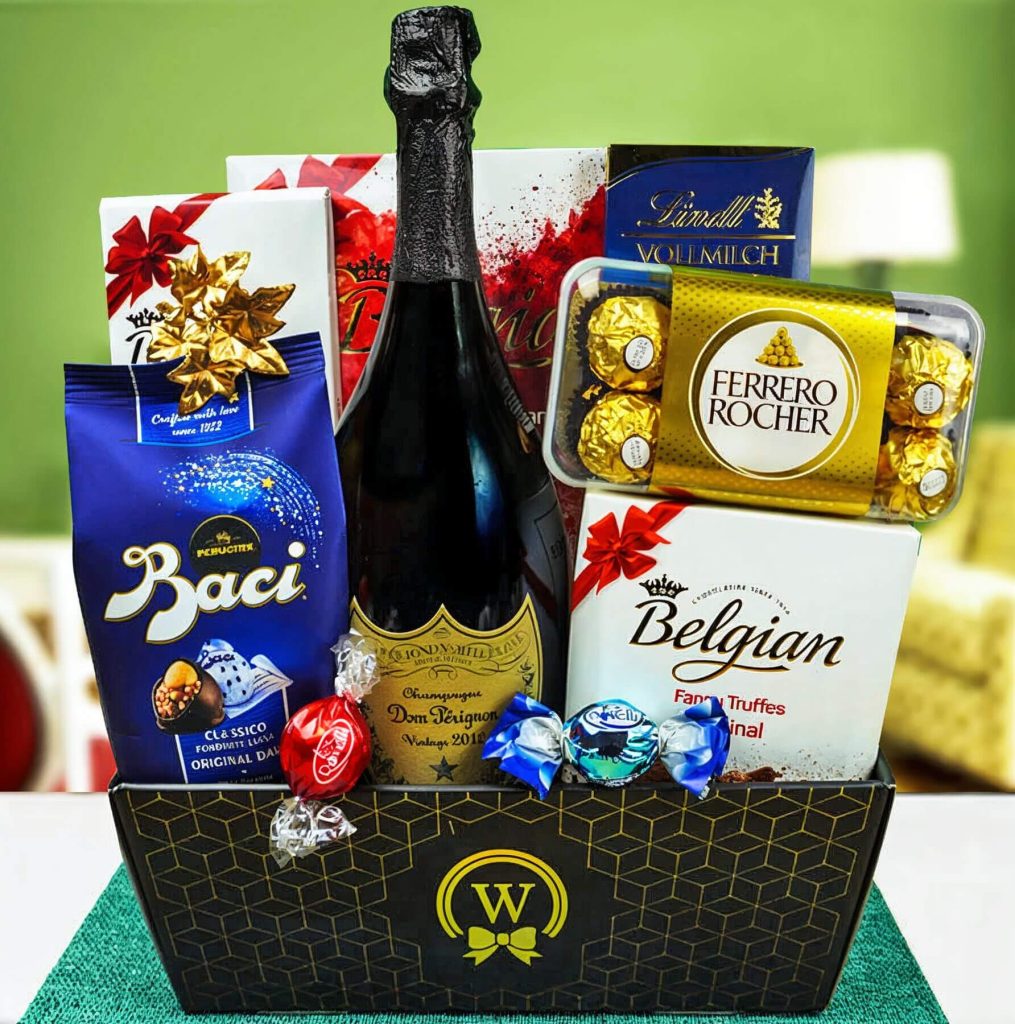
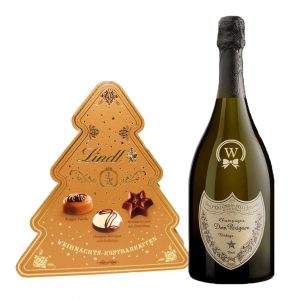
Say a hamper is priced at £150 and includes one 0.75 litre bottle of champagne at around 12% ABV, along with chocolates and other non-alcoholic items. Because it is over £135 and contains alcohol, expect the courier to collect: import VAT at 20% of the declared value, roughly £30, plus excise duty on the champagne, roughly £2.76, plus a carrier handling fee of roughly £10 to £25. Customs duty may add a further amount unless the goods qualify for 0% under the UK-EU trade agreement. Total likely additional charges: roughly £43 to £58, with VAT as the largest single component.
Compare that to a similar hamper priced at £120 with no alcohol. If it is correctly declared and the seller charges UK VAT at checkout, as Walwater Gifts does, that VAT is already included in the £120, and there should be nothing further to pay at the border, since it stays under the £135 threshold. Once a basket crosses £135, that changes, which is worth keeping in mind if the recipient is UK-based and the goods do not contain alcohol.
What Happens When the Recipient Refuses to Pay
Not everyone expects or accepts unexpected import charges on a gift. Some recipients, particularly those who did not know a gift was coming, simply do not pay, either because they are confused, because they assume it is a mistake, or because they resent being charged for someone else’s thoughtful gesture.
When a customs payment is not made within the carrier’s specified window, typically 5 to 10 days, the parcel is returned to the sender, usually at the sender’s cost, or destroyed. The gift is gone. The money spent on it is gone. And the relationship the gift was meant to strengthen has instead generated a story about a missed delivery and an unexpected bill.
This is not a rare edge case. It is a predictable outcome for a meaningful share of gift basket shipments from Europe to UK addresses, particularly at higher price points or on baskets that include alcohol, where the charges are more likely to appear. Any European gifting operation that does not warn its customers about this risk is not giving them the information they need to make the right choice.
The Structural Fix: Send Gift Baskets to European Recipients Without Customs Fees
Here is the part most customs-fee explainers miss: for a large share of people searching for information about UK gift basket customs fees, the actual goal is not to navigate the fees. It is to send a gift to someone in Europe without the fees being a problem in the first place.
If your recipient is in France, Germany, Italy, the Netherlands, Spain, Poland, or elsewhere in Europe, the UK customs regime does not have to be your problem at all. It applies to goods entering the UK from Europe. It does not apply to goods moving between EU member states.
Sending a gift basket from a European-based provider, one whose warehouse and dispatch operations sit inside the EU, means the gift never crosses the UK border and never encounters UK customs. This is the model Walwater Gifts operates on. Based in Slovenia and delivering across 26 European countries, every basket ships from within the EU, so intra-EU movement rules apply rather than UK import rules. Explore the range at sendgiftsineurope.com/gift-baskets/, and for UK-bound gifts specifically, sendgiftsineurope.com/gift-baskets-to-united-kingdom/.
What to Check Before Sending a Gift Basket from Europe to the UK
- Declare the accurate commercial value. Do not undervalue to try to reduce fees. HMRC can open parcels and revalue contents, which can delay delivery and add penalties.
- Check whether the basket contains alcohol. If it does, expect excise duty and VAT to be collected by the courier regardless of the total price.
- Ask whether the provider charges UK VAT at checkout for orders £135 or under. If they do, a non-alcohol basket at that price point should not generate extra charges at the border.
- Ask whether the provider claims preferential origin under the UK-EU trade agreement, which can remove customs duty on qualifying items above £135.
- Warn the recipient that a payment demand may arrive, even if you believe the basket is VAT-inclusive. This removes the surprise element and avoids refused deliveries.
- For recipients based in Europe rather than the UK, use a European-based gifting provider and remove UK customs from the equation entirely.
A Quick Note on This Information
This page explains general UK customs, VAT, and excise duty rules as they apply to gift baskets, based on current guidance published on gov.uk. It is not tax or customs advice, and thresholds and rates do change. The £135 duty relief itself is scheduled for removal by March 2029 at the earliest, following the Autumn 2025 Budget announcement, and alcohol duty rates are adjusted periodically. For a specific shipment, check gov.uk or contact HMRC or Border Force directly.
Frequently Asked Questions
Do I have to pay customs on a gift basket sent from Europe to the UK?
It depends on the value and whether it contains alcohol. A non-alcohol basket at £135 or under should have UK VAT already included at checkout, with nothing more to pay. Above £135, or if the basket contains alcohol at any price, expect the courier to collect VAT, excise duty, or both before delivery.
Why doesn’t the £39 gift allowance apply to a basket I bought online?
HMRC only treats something as a customs “gift” when it is sent by one private person to another, unpaid, and occasional. A basket you purchase, even one sent as a gift, does not meet that definition, so the £39 and £135 gift-relief thresholds do not apply to it.
Who pays the customs fees, the sender or the recipient?
By default, the recipient pays. Under standard shipping terms, the carrier presents a payment demand to the recipient before releasing the parcel, unless the seller has specifically arranged Delivered Duty Paid shipping or already collected VAT at checkout for a qualifying order.
Can I mark a gift basket as a “personal gift” to avoid UK customs fees?
No. HMRC requires the declared value of commercial shipments to reflect the true commercial value. Marking a purchased basket as a personal gift to try to access the gift-relief threshold is a customs violation, and parcels can be opened, revalued, and charged the correct amount plus a potential penalty.
Does alcohol in a gift basket always get charged extra?
Generally yes. Alcohol is excise goods, and UK excise duty applies to it regardless of the total value of the basket, on top of VAT. This is usually collected by the courier rather than included at checkout.
How much is UK alcohol excise duty on a bottle of wine or spirits?
As of 1 February 2026, roughly £26.61 to £33.99 per liter of pure alcohol depending on strength. As a rough guide, a 0.75-liter bottle of champagne around 12% ABV works out to about £2.76, and a 0.7-liter bottle of 40% whisky works out to about £9.52. These are illustrative and rounded; check gov.uk for current rates.
Will I pay customs duty as well as VAT?
Only above £135, and only if the goods do not qualify for 0% duty under the UK-EU Trade and Cooperation Agreement. Many EU-made food and drink products do qualify if the seller can document where they originated.
What is the cheapest way to send a gift basket to Europe without customs problems?
Use a European-based gifting provider. If the basket ships from within the EU to a recipient also in the EU, there are no UK customs fees, import VAT charges, or carrier handling surcharges to worry about.
Does Walwater Gifts ship to UK recipients?
Walwater Gifts primarily serves recipients within European countries. For senders in the UK who want to send gifts to European friends, family, or business contacts, Walwater Gifts ships from within the EU, so the gift arrives without UK or European customs complications on the receiving end.
Is VAT already included when I order a gift basket for a UK recipient?
For non-alcohol orders valued at £135 or under, yes. Walwater Gifts is registered for UK VAT and charges it at checkout on qualifying orders, so the price you pay already includes it.
What if my basket contains alcohol and is priced under £135?
The £135 VAT-inclusive checkout treatment applies to non-excise goods. Alcohol is excise goods, so excise duty and VAT on the alcohol portion may still be collected by the courier regardless of the total price.
Can the parcel get stuck or returned if my recipient doesn’t pay a customs bill?
Yes. If a customs payment isn’t made within the carrier’s window, typically 5 to 10 days, the parcel is returned to the sender or destroyed.
Are these rates and thresholds likely to change?
Yes. The UK government has announced plans to remove the £135 duty relief by March 2029 at the earliest, and alcohol duty rates are adjusted periodically. Check gov.uk for the current figures before relying on a specific number.
Is this page tax or legal advice?
No. It is general information based on current gov.uk guidance, provided to help you understand what to expect. For advice on a specific shipment or situation, check gov.uk directly or contact HMRC or Border Force.