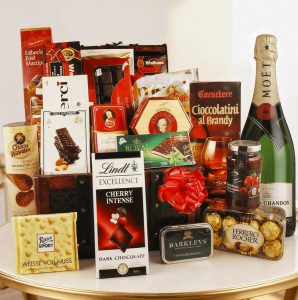
Corporate Gifts Tax Deductible EU rules are not uniform. Each European Union country sets its own rules for business-expense deductions, VAT recovery, employee benefits, and gift limits. Germany, France, Spain, the Netherlands, Ireland, and Sweden all treat business gifts differently. Companies should therefore check the tax rules that apply to the paying business before approving a cross-border gift program.
Corporate gifting across Europe creates two separate jobs.
- The first is choosing and delivering the gift.
- The second is accounting for it correctly.
- That second part becomes confusing quickly.
A client hamper may be deductible for corporation tax but have restricted VAT recovery. An employee Christmas gift may fall under staff-benefit rules. A promotional item with a company logo may receive different treatment from a bottle of Champagne given to one client.
The rules also change between countries. This guide explains the main concepts first, then compares several major European Union jurisdictions.
Important: This article provides general information, not tax or legal advice. Tax treatment depends on the business, recipient, value, purpose, accounting method, and local rules. Confirm material gifting programs with your accountant or tax adviser.
Key Takeaways
- There is no single EU-wide corporate gift deduction limit.
- EU VAT law recognizes an exception for certain samples and gifts of small value, but member states define and apply their own detailed rules.
- Income-tax deductibility and VAT recovery are separate questions.
- Client gifts and employee gifts can receive different tax treatment.
- Germany currently uses a €50 annual threshold for deductible gifts to non-employees.
- France generally allows reasonable business gifts linked to normal business activity, while VAT recovery on gifts is much more restricted.
- Cross-border companies should record the recipient, business reason, value, date, invoice, and country for each gift.
Is There One EU Rule for Corporate Gift Tax Deductions?
No. The European Union harmonizes much of VAT law, but it does not create one corporate-income-tax rule for all business gifts.
Article 16 of the EU VAT Directive says that free disposal of business goods can be treated as a taxable supply when input VAT was deducted. It creates an exception for business samples and gifts of small value.
That EU rule provides a framework. It does not tell a German company, French company, or Dutch company exactly how much it may deduct from taxable profits. National law does that.
This means a cross-border gifting team should separate:
- Corporate income tax deduction
- Input VAT deduction
- Possible output VAT on the gift
- Employee benefit taxation
- Anti-bribery and company-policy rules
One answer rarely covers all five.
Which Country's Tax Rules Matter?
The recipient’s location alone does not determine the answer. Imagine a German company buys Christmas gifts for employees in France, Spain, and the Netherlands.
The deduction in the German company’s accounts will normally need to be reviewed under the rules that apply to the German business. There may also be VAT, payroll, permanent-establishment, or local-benefit issues connected to where goods are bought, delivered, or received.
A company based in the United States sending gifts to Europe should not assume that French tax-deduction rules apply merely because the recipient lives in France. Start with the entity paying for and recording the expense. Then check any recipient-country issues separately.
Tax Deduction and VAT Deduction Are Not the Same Thing
This distinction prevents many accounting errors.
Tax-Deductible Expense
A deductible expense may reduce the company’s taxable business profit.
VAT Deduction
A VAT deduction allows a VAT-registered business to recover qualifying input VAT.
A gift may qualify as a business expense but still have restricted VAT recovery.
France is a good example. French tax guidance recognizes reasonable business gifts as deductible business expenses when they form part of normal business management and are not excessive.
VAT treatment is narrower. France’s Ministry of Economy says VAT recovery on free gifts is generally prohibited, with an exception for low-value gifts within the applicable small-gift threshold.
So “deductible” does not automatically mean “VAT recoverable.”
Client Gifts and Employee Gifts Need Separate Review
Do not place both in one accounting category without checking. A bottle sent to a long-standing client is an external business gift. A Christmas hamper sent to an employee is compensation, staff welfare, or a benefit depending on local rules.
The Netherlands illustrates this well. Its VAT rules use a yearly threshold for gifts, business gifts, and employee benefits when determining input-VAT recovery. Current Dutch guidance sets that threshold at €227 excluding VAT per beneficiary per year.
Employee payroll treatment can still require a separate review. The same principle applies in other countries.
Are Advertising Gifts Treated Differently?
Often, yes. A pen carrying a company logo is not always treated the same way as a luxury Champagne hamper. EU VAT law explicitly distinguishes certain business samples and low-value gifts.
National systems also frequently distinguish promotional merchandise from personal business gifts.
Spain’s VAT law, for example, contains exceptions for qualifying free samples and low-value advertising objects even though input VAT on ordinary gifts to clients, employees, or third parties is generally restricted.
Sweden also distinguishes advertising gifts from representation gifts. Its Tax Agency says qualifying advertising gifts should be simple, relatively low-value items connected to the business or carrying the company identity.
Corporate Gift Tax Rules by Country
The following comparison covers selected major EU markets rather than all 27 member states.
Rules can change, and unusual gifts may require different treatment.
Country | Business Expense Rule | VAT Point | Useful Current Limit or Rule |
Germany | Gifts to non-employees can qualify within statutory limit | Separate VAT review needed | €50 per recipient per business year for relevant income-tax deduction |
France | Reasonable business gifts may be deductible | VAT generally restricted except qualifying low-value gifts | Low-value VAT exception applies subject to current French threshold |
Spain | Client/supplier attention may be deductible within corporate-tax rules | VAT on ordinary client/employee gifts generally not deductible | Client/supplier attention expenses capped at 1% of net turnover |
Netherlands | Business-gift expenses follow Dutch deduction restrictions | VAT recovery subject to yearly beneficiary threshold | €227 excl. VAT per person per year |
Ireland | Normal business-purpose rules apply separately | Gifts costing €20 or less excl. VAT can fall outside gift VAT charge | €20 VAT gift rule |
Sweden | Ordinary gifts normally not deductible, with exceptions | Representation VAT rules have separate caps | Representation/advertising gifts generally up to SEK 300 under current guidance |
Germany
Germany has one of the clearest numerical rules for gifts to business contacts. Section 4 of the German Income Tax Act states that gifts to people who are not employees cannot reduce taxable profit unless the total acquisition or production cost of gifts to that recipient during the business year does not exceed €50.
The amount is recipient-based across the year. That means four separate gifts cannot automatically each use a fresh €50 allowance.
Documentation matters. Germany also has separate rules for taxing certain benefits in kind. Section 37b allows businesses in qualifying cases to use a flat 30% income-tax method for certain non-cash benefits and gifts, subject to its conditions and limits.
Practical point: A German company’s client gift program should track cumulative annual gift value by recipient rather than looking only at each invoice separately.
France
France takes a more reasonableness-based approach to deducting business gifts from taxable profit. Official French guidance says business gifts offered to identified clients can normally be deductible when they are lawful and their value is not excessive.
France’s Ministry of Economy similarly states that business gifts can be deducted when they form part of normal business management and remain proportionate to the commercial relationship.
VAT is different. French guidance states that VAT on goods given free is generally not deductible, although a low-value gift exception applies within the current statutory threshold.
There are also reporting requirements when total business-gift expenditure becomes substantial. French public-service guidance currently references reporting thresholds for gifts and certain advertising objects.
Practical point: In France, the commercial reason and proportionality of the gift matter as much as its price.
Spain
Spain makes the income-tax and VAT distinction particularly clear.
For Spanish corporation tax, expenditure on attention to clients or suppliers is not treated as a prohibited donation, but deductible client and supplier entertainment is limited to 1% of net turnover for the tax period.
VAT is stricter. Spain’s Tax Agency states that input VAT on goods intended as gifts or attention to clients generally cannot be deducted. The Spanish VAT law contains exceptions for qualifying free samples and low-value advertising objects.
Practical point: A Spanish business may have a corporation-tax deduction for client gifting while still being unable to recover the VAT.
Netherlands
Dutch rules require careful annual tracking by the recipient. The Netherlands Tax Administration says VAT on gifts, business gifts, and employee benefits can generally be deducted only when total relevant expenditure for that beneficiary does not exceed €227 excluding VAT per year.
Dutch government business guidance gives the example of staff Christmas gifts and applies the same €227 annual threshold when considering VAT recovery.
Dutch income-tax and corporation-tax treatment of representation and business gifts follows separate deductibility restrictions. Current Dutch Tax Administration guidance includes specific limitations for relationship gifts involving food, drink, and similar expenses.
Practical point: Keep a yearly total for each employee or business contact, not just an individual gift invoice.
Ireland
Ireland has a clear VAT rule for low-value business gifts.
Irish Revenue states that a gift costing the business €20 or less excluding VAT is not liable to VAT under the business-gift rule. If the cost exceeds €20, VAT can apply to the full amount rather than only the excess.
A series of gifts intended to form a larger combined gift cannot necessarily be split into separate €20 items to obtain the relief. Irish business-income deductibility still depends on the applicable business-expense rules, so the €20 number should not be presented as a universal “tax deduction allowance.”
Practical point: Ireland’s €20 rule in this context is a VAT rule, not a blanket corporation-tax gift limit.
Sweden
Sweden is more restrictive with ordinary gifts. The Swedish Tax Agency says businesses normally cannot deduct gifts, although exceptions exist for representation and advertising gifts.
Current Swedish guidance allows deductions for qualifying representation gifts up to SEK 300 excluding VAT per person, provided the gift has an immediate connection with business activity. An example is a gift connected with a customer’s business anniversary or opening a new location.
The Tax Agency specifically notes that representation gifts connected with holidays or personal occasions are normally not deductible under these rules. That makes Sweden particularly important for companies planning Christmas gifts or personal birthday gifts for clients.
Practical point: Do not assume that calling a Swedish client gift “representation” makes a Christmas hamper deductible.
What About Employee Christmas Gifts?
Employee gifts deserve their own tax check. A business expense may be deductible to the employer while still creating a taxable employee benefit.
Local exemptions may also exist for certain Christmas, anniversary, or staff-welfare gifts. The Netherlands, for example, includes employee gifts and other staff benefits when applying its €227 VAT threshold.
Germany separately has employee benefit-in-kind rules that should not be confused with the €50 annual rule for gifts to non-employees. When planning employee gifting across several countries, ask payroll as well as accounts payable.
Does Sending the Gift Across an EU Border Change the Deduction?
Not automatically. A French recipient does not turn a German company’s expense into a French corporation-tax deduction.
However, cross-border gifting can affect:
- Invoice VAT
- Place-of-supply rules
- Local VAT registration
- Distance-sales treatment
- Excise duties for alcohol
- Employee-benefit rules
- Permanent establishment accounting
Alcohol adds another issue because wine, Champagne, and spirits can carry excise obligations. That is why finance teams should tell the gift supplier which company is paying and which countries are receiving gifts.
How Should Businesses Document Corporate Gifts?
A strong record should answer five basic questions:
- Who received the gift?
- Why was it sent?
- How much did it cost?
- When was it sent?
- Which entity paid for it?
Keep the supplier invoice.
Also record the recipient company or employee, business reason, gift type, country, value, and occasion. For Germany and the Netherlands, annual recipient totals can be especially important because their rules use recipient-based limits or thresholds. For larger programs, add an internal gift code or campaign name.
Six Corporate Gifts to Consider
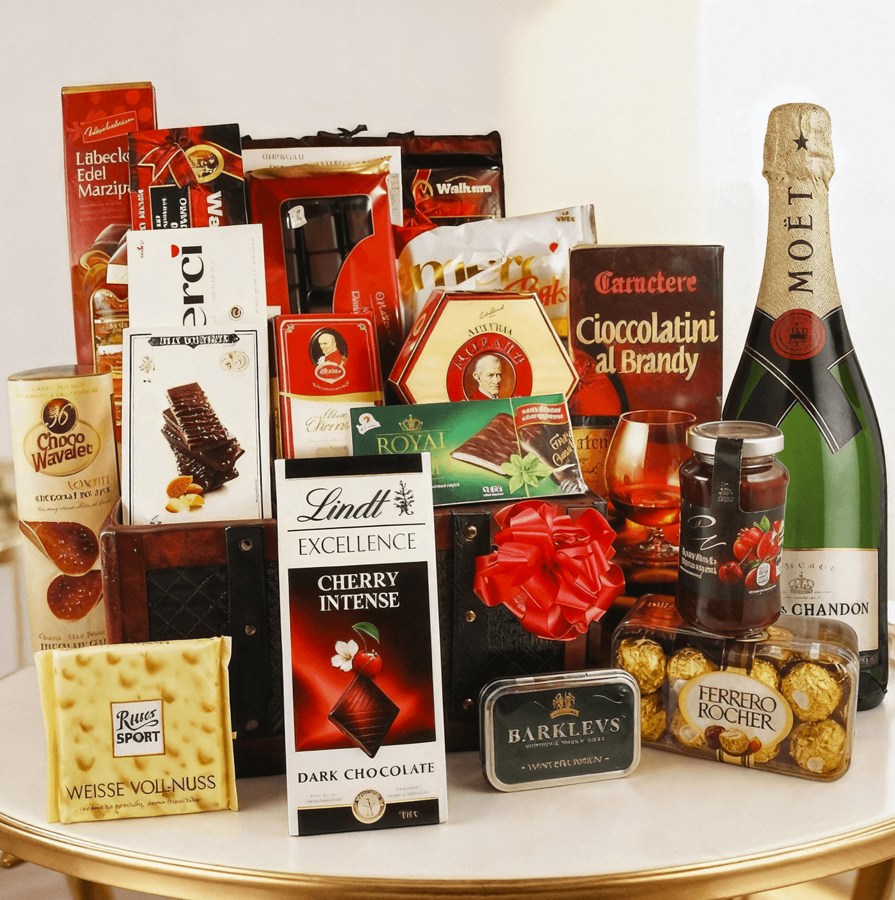
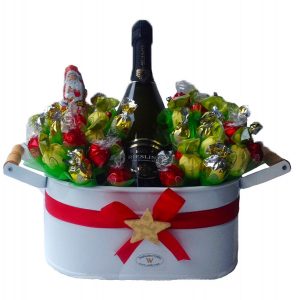
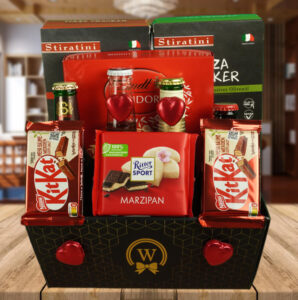
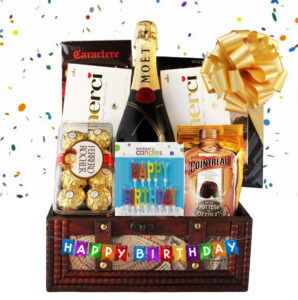
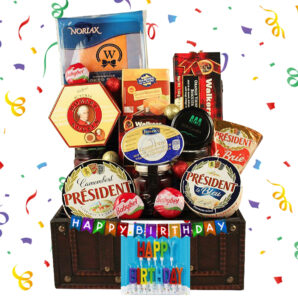
These Walwater Gifts suggestions show different corporate gifting styles.
They are not tax recommendations. A gift being commercially suitable does not mean it automatically qualifies for a deduction in every country.
Which Type of Corporate Gift Needs the Most Tax Attention?
Gift Type | Main Tax Question | Extra Check |
Client hamper | Is business expense deductible? | VAT recovery |
Employee Christmas gift | Is it a taxable employee benefit? | Payroll treatment |
Branded promotional item | Does advertising-gift treatment apply? | Value and branding |
Champagne or wine gift | Is the gift deductible? | Alcohol excise and policy |
High-value executive gift | Is the value reasonable? | Anti-bribery and approval |
How to Plan Tax-Aware Corporate Gifting Across Europe
1. Identify the Paying Company
Determine which legal entity will book the expense.
2. Separate Employees From External Recipients
Do not mix payroll gifts with client gifts in one tax category.
3. Set a Gift Value
Check local tax and VAT thresholds before finalizing the hamper.
4. Record the Business Reason
Examples include client appreciation, company anniversary, employee recognition, or promotional activity.
5. Review VAT Separately
Do not assume a deductible expense means deductible VAT.
6. Check Alcohol and Compliance Rules
Wine and Champagne can involve tax, age, excise, and company-policy issues.
7. Keep Complete Records
Save invoices, recipient lists, values, dates, and purposes.
8. Ask a Local Adviser When the Campaign Is Material
This is especially important for multi-country employee programs or high-value client gifts.
Why Ordering Through a European Gift Company Can Help
International buyers often want to send gifts to employees or clients across several European Union countries without exporting each parcel themselves.
Walwater Gifts prepares and ships gifts within Europe for supported EU destinations.
Customers can order from the USA, Canada, the UK, Australia, and other locations while recipients are based across Europe. Gift categories include gourmet food, chocolates, Champagne, wine, whisky, alcohol-free options, employee gifts, and client gifts.
Customers can add a message printed on a designed greeting card. Tracking is provided after dispatch, where available. This can simplify fulfillment.
It does not replace the buyer’s tax review.
Walwater Gifts can provide the commercial invoice and gift-delivery service, while the buyer’s finance team determines how the expense should be recorded.
Browse options to send corporate gifts across Europe with Walwater Gifts.
- Availability depends on the destination and selected gift.
- Delivery dates and costs should be confirmed during checkout.
- Adult signature rules may apply to gifts containing alcohol.
Common Corporate Gift Tax Mistakes
Using One EU Limit for Every Country
No universal business-gift deduction threshold exists.
Confusing VAT With Corporation Tax
They are separate calculations.
Applying the Recipient Country’s Rule Automatically
Start with the entity paying and recording the expense.
Treating Employees and Clients the Same
Employee benefit rules may apply.
Calling Every Branded Item an Advertising Gift
National definitions can be narrow.
Ignoring Annual Recipient Totals
Germany and the Netherlands are two examples where recipient-level tracking matters.
Forgetting Alcohol Compliance
Alcohol can involve additional excise and delivery rules.
Sending Excessive Client Gifts
A gift can fail a deduction test if it is disproportionate, lacks a clear business purpose, or breaches company policy.
Keeping Only the Supplier Invoice
Record the recipient and business reason too.
Final Corporate Gift Tax Checklist
Before approving a European gift campaign, confirm:
- Which company is paying?
- Which country taxes that company?
- Is the recipient an employee or external business contact?
- What is the gift’s value?
- Has the recipient received other gifts this year?
- Is the expense deductible?
- Is input VAT recoverable?
- Could output VAT apply?
- Does the gift create an employee benefit?
- Is the gift promotional or personal?
- Is alcohol included?
- Are local excise rules relevant?
- Does company policy allow the gift?
- Is the value proportionate?
- Is management approval needed?
- Is the supplier invoice complete?
- Is the recipient recorded?
- Is the business purpose documented?
- Are delivery and gift costs separated where useful?
- Has a tax adviser reviewed material or unusual cases?
Frequently Asked Questions
Are corporate gifts tax deductible in the EU?
There is no single EU-wide rule. Corporate income tax deductions are mainly determined by national tax law, while EU VAT rules provide a common framework that member states implement locally. The paying company’s jurisdiction, recipient type, gift value, and business purpose all matter.
Is VAT deductible on corporate gifts in the EU?
Sometimes. VAT treatment varies by country and gift type. EU law provides an exception for certain small-value business gifts, but member states set detailed national rules. Spain, France, Ireland, and the Netherlands all apply different restrictions or thresholds.
Are client gifts deductible in Germany?
Germany allows relevant gifts to non-employees to reduce taxable profit when the total acquisition or production cost for that recipient during the business year does not exceed €50, subject to the other requirements. Keep recipient-level records.
Are corporate gifts deductible in France?
Reasonable business gifts can generally qualify as deductible expenses in France when connected to normal business management and not excessive. VAT recovery follows separate, more restrictive rules.
Can a Spanish company deduct client gifts?
Spanish corporation-tax rules allow certain client or supplier attention expenses subject to a limit of 1% of net turnover for the tax period. Input VAT on ordinary client gifts is generally not deductible.
What is the Netherlands VAT limit for business gifts?
Current Dutch guidance uses a threshold of €227 excluding VAT per beneficiary per year for gifts, business gifts, and employee benefits when determining VAT recovery.
What is Ireland’s VAT limit for gifts?
Irish Revenue currently states that business gifts costing €20 or less excluding VAT are not liable to VAT under the gift rule. Gifts above that amount can become liable on the full cost.
Are client Christmas gifts deductible in Sweden?
Often not under ordinary representation-gift rules. Sweden allows deductions for qualifying representation and advertising gifts, but the Tax Agency says representation gifts associated with holidays or personal occasions normally do not qualify.
Are employee Christmas gifts taxed the same way as client gifts?
No. Employee gifts can create payroll or benefit-in-kind questions that do not apply to external clients. Always separate employee and client gifting during tax review.
Can I deduct a gift sent to another EU country?
Possibly. Cross-border delivery does not by itself determine deductibility. The tax position of the company paying for the gift is usually the starting point, while VAT and recipient-country issues may require separate analysis.
Does putting a company logo on a gift make it deductible?
Not automatically. Some countries provide different treatment for genuine advertising gifts, but the item may need to be low-value, promotional, connected to the business, or visibly branded. National definitions should be checked before relying on advertising-gift treatment.
Are Champagne gifts tax deductible?
They may be in some circumstances, but alcohol does not create an automatic deduction. Check value limits, business purpose, VAT rules, employee-benefit treatment, alcohol regulations, and internal gift policies.
Are gifts to employees deductible?
They can be a business cost, but the employee may also receive a taxable benefit depending on national payroll rules and available exemptions. HR and payroll should review employee gifts separately from client gifts.
Should delivery fees be included when calculating a gift limit?
That depends on the national rule and how the relevant threshold defines cost. Do not assume every country treats product value, VAT, packaging, and delivery identically. Your accountant should confirm the calculation method.
Can a US company use EU corporate gift tax limits?
Not simply because the recipient is in Europe. A US company normally starts with the tax rules applying to the US entity recording the expense, then checks European VAT, customs, payroll, or local compliance issues connected with the delivery.
What records should we keep for corporate gifts?
Keep the supplier invoice, recipient name, recipient company, date, business purpose, value, country, gift type, and any annual recipient total needed under local rules. Larger programs should also retain internal approvals and recipient lists.
Are high-value client gifts deductible?
They may face greater restrictions. France, for example, requires business gifts to remain proportionate and connected with normal business activity, while Germany applies a strict annual recipient limit for relevant non-employee gifts.
Can Walwater Gifts tell us whether our gift is tax-deductible?
Walwater Gifts can provide gift and delivery information, but deductibility depends on the buyer’s tax position and local rules. Your accountant or tax adviser should make the final tax decision.
Final Call to Action
Understanding Corporate Gifts Tax Deductible EU rules starts with separating gift delivery from tax treatment.
Choose the recipient. Set the value. Record the business purpose. Check whether the recipient is an employee or client. Then review corporate-tax and VAT treatment under the rules applying to your business.
For employee recognition, client appreciation, company milestones, Christmas gifts, and other business occasions, browse corporate gifts available through Walwater Gifts and arrange delivery to supported European destinations.
Your finance or tax team can then review the invoice and gift record under the appropriate national rules.