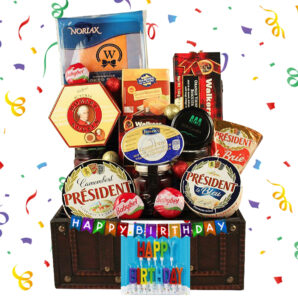
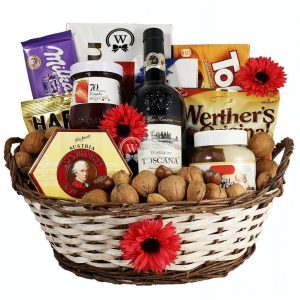
To send gifts to Europe to a man without customs fees, the simplest approach is often to order from a supplier that already prepares and ships the gift within the European Union. A gift bought from a US retailer and imported into the EU is still a commercial import, even if it is intended as a birthday or Christmas present.
The word “gift” causes a lot of confusion at customs. You may buy a wine hamper in the United States, mark the order as a birthday present, and assume the European recipient will not pay anything. That is not necessarily how EU customs rules work.
The key questions are:
- Who is sending the parcel?
- Was the gift purchased from a business?
- Where does the physical parcel start?
- What is its value?
- Does it contain alcohol?
- Is the shipment entering the EU from outside?
This guide explains those differences and shows why European fulfillment can make gift delivery simpler.
Key Takeaways
- A commercial purchase does not become a private customs gift simply because it is for a birthday or Christmas.
- EU private-gift relief generally applies to qualifying private-person-to-private-person gifts up to €45.
- Since July 1, 2026, qualifying low-value distance-sale imports up to €150 can face a temporary €3 customs duty per item.
- Import VAT applies broadly to goods entering the EU from outside, subject to specific exemptions.
- Goods already in EU free circulation can move within the EU without a new external customs import process at each internal border.
- Alcohol has separate excise and age-delivery rules, even inside the EU.
- Ordering from a European fulfillment company can avoid creating a new US-to-EU import shipment for each gift.
Does Calling a Parcel a “Gift” Make It Duty-Free?
No. The purpose of the parcel does not automatically determine customs treatment. A birthday gift purchased from a US online retailer is still a commercial transaction. A Christmas basket purchased from an American company and shipped directly into France is still entering the European Union as imported merchandise.
The recipient may be receiving a gift emotionally, but customs authorities look at the nature of the transaction and shipment. That distinction is essential.
What Is the EU €45 Private Gift Rule?
The European Union does provide relief for certain genuine private gifts.
European Commission guidance says the relief can apply when goods:
- Are sent from a private individual outside the EU
- Go to another private individual inside the EU
- Are occasional
- Are for personal or family use
- Have no commercial character
- Are sent without payment from the recipient
- Have a total qualifying value up to €45
The guidance also notes special quantitative restrictions for alcohol, tobacco, perfume, and similar regulated goods.
That is very different from ordering a hamper from an American commercial website.
Does the €45 Gift Allowance Apply to Online Purchases?
Generally, no. If you purchase the goods from a business, the shipment is a commercial sale. The €45 relief is designed for qualifying private-to-private consignments.
For example:
Possible private gift:
You personally buy a birthday shirt, own it, pack it yourself, and send it occasionally to your brother in Italy without receiving payment from him.
Commercial purchase:
You order a birthday hamper from a US retailer and tell the retailer to ship it directly to your brother in Italy.
The second transaction is an imported commercial sale. Calling it a “gift” on the greeting card does not convert it into a private gift for customs purposes.
What Changed for Low-Value EU Imports in 2026?
A major change took effect on July 1, 2026. The European Commission states that the customs-duty exemption for distance-sale imports up to €150 was abolished.
A temporary €3 customs duty per item now applies to qualifying distance sales of imported goods in consignments up to €150. The measure is intended to remain until July 1, 2028, when broader customs changes are expected.
This applies to imported e-commerce goods. It does not turn normal intra-EU movement of goods already in free circulation into a new import.
Does Import VAT Still Apply?
Yes. Import VAT is a separate issue from customs duty.
The European Commission states that importation of goods is a taxable transaction and that goods entering the EU from outside the Union can be subject to VAT. Taxation and Customs Union
The former low-value VAT exemption was abolished in 2021. Commercial goods imported into the EU can therefore be subject to VAT even when their value is relatively low. Taxation and Customs Union
This is why the phrase “duty-free” can be misleading.
You need to consider:
- Customs duty
- Import VAT
- Excise duty
- Carrier or brokerage fees
- Product restrictions
These are not the same charge.
Can the Recipient Be Asked to Pay Charges?
Yes, if the shipment enters the EU from outside and the applicable taxes or fees have not already been handled. The party liable for import VAT can be the importer or another person designated under national rules.
That creates the unpleasant situation many gift senders want to avoid: You send a surprise birthday present. The recipient receives a customs notice. He has to pay before the gift is released. For a gift, that is rarely the experience the sender intended.
Why Does EU-Based Fulfillment Help?
EU-based fulfillment changes the physical route.
Instead of:
USA → international import → EU customs → recipient
the gift can follow:
EU warehouse → EU courier network → recipient
The European Commission explains that once goods have cleared customs and entered free circulation, they can circulate throughout the European Union.
This does not mean “no taxes exist.” It means the recipient is not receiving a newly imported consumer parcel from the United States. That distinction can remove the customs-import stage from the final gift delivery.
Is Buying From Europe the Same as Sending From Europe?
Not always. You need to know where the parcel physically originates. A website may sell to European customers while still dispatching products from the United States, UK, Asia, or another non-EU location.
Look for clear information about:
- Fulfillment location
- Dispatch country
- Import handling
- VAT
- Customs responsibility
The buyer’s location is not the key issue. The parcel’s origin is.
How Walwater Gifts Handles EU Gift Fulfillment
For supported European Union destinations, Walwater Gifts prepares and ships gifts from within Europe. That means a customer in the USA, Canada, the UK, or Australia can place the order while the physical gift enters the courier network inside the EU.
This is useful for:
- Birthday gifts
- Christmas gifts
- Congratulations
- Thank-you gifts
- Employee gifts
- Client gifts
- Anniversary gifts
- Retirement gifts
Availability depends on the destination and selected gift.
Can Alcohol Gifts Move Duty-Free Inside the EU?
Alcohol needs more careful wording. There may be no new external customs import when goods already in free circulation move within the EU, but alcohol remains an excise product.
EU rules require excise duty to be handled according to the country of destination for distance sales of excise goods. The consignor is generally responsible for ensuring payment under the applicable process.
Therefore:
No external customs import does not mean no alcohol tax obligations.
Does the Recipient Need to Sign for Alcohol?
Adult-signature rules may apply. UPS states that its European alcohol program only delivers alcoholic beverages to adults. Residential alcohol shipments require the Adult Signature Required option under that program.
For a wine, Cognac, whisky, or other alcohol gift:
- Use an adult recipient.
- Provide a valid phone number.
- Avoid an address where nobody is normally present.
- Check the selected destination.
- Confirm current product eligibility.
Can I Send Food Gifts From the USA to Europe?
You can, but food imports can add complexity. Commercial food shipments can be subject to EU import requirements, labeling rules, customs declarations, VAT, and product restrictions.
Certain animal products face tighter controls. For a sender who simply wants to give chocolate, savory snacks, or a gourmet basket, purchasing from a European supplier can be much easier than personally exporting food.
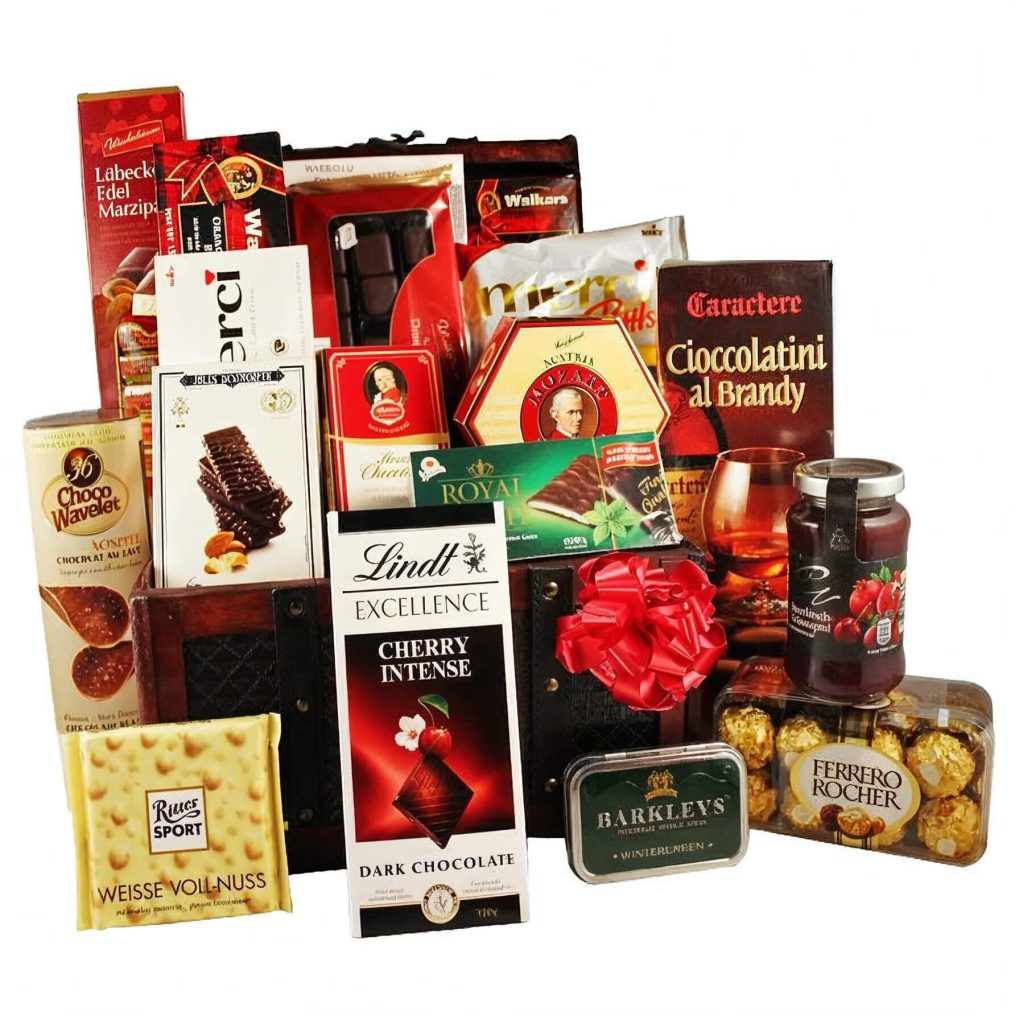
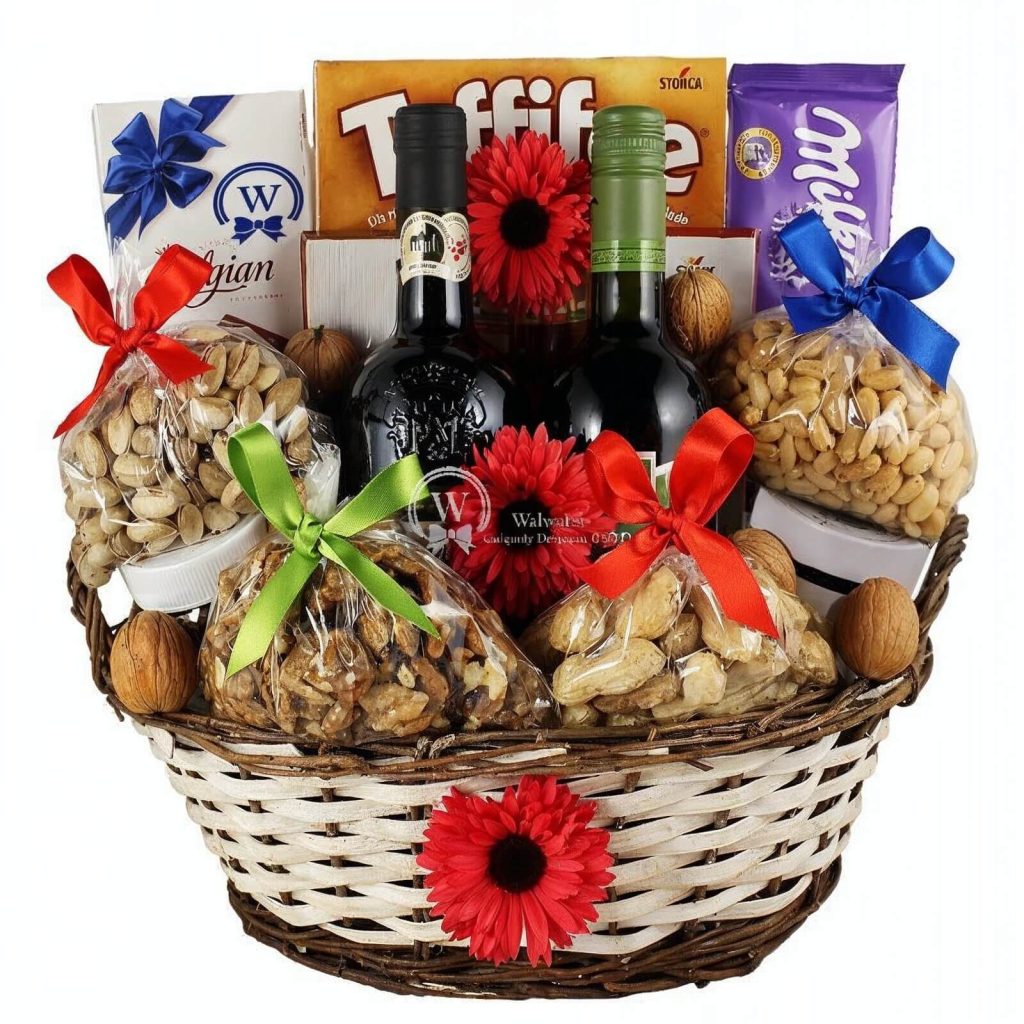
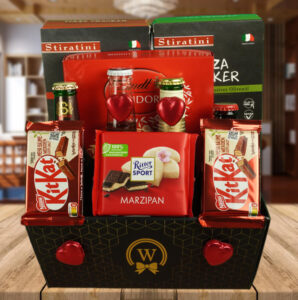
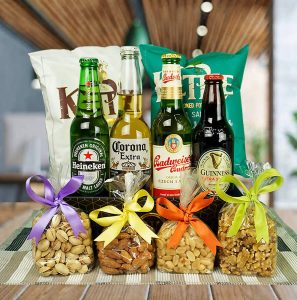
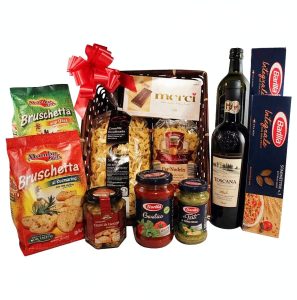
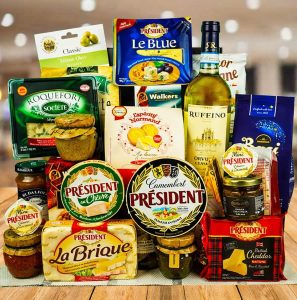
Six Gift Ideas for a Man in Europe
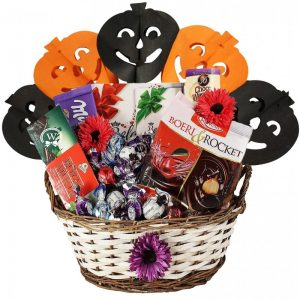
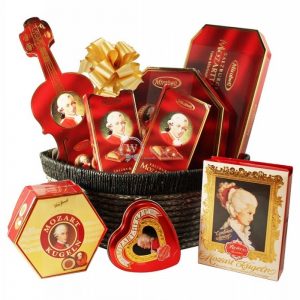
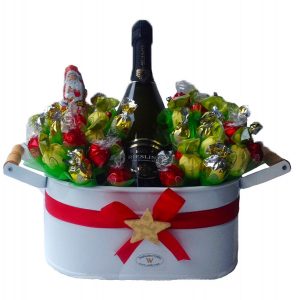
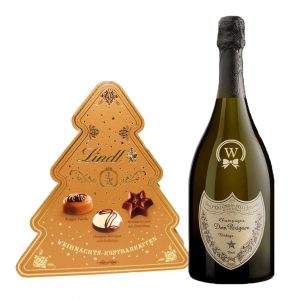
The following products were requested for this guide. Descriptions are intentionally short and do not list every exact item or price.
Which Gift Type Is Easiest to Send?
Gift Type | Customs Complexity if Shipped From USA | EU Fulfillment Advantage | Main Check |
Chocolate | Import VAT and declaration | No new external import | Allergies |
Gourmet food | Food and customs rules | Simpler regional delivery | Ingredients |
Wine | Customs, VAT, excise | Seller handles EU route | Alcohol eligibility |
Cognac | Customs, VAT, excise | Seller handles EU route | Adult receipt |
Mixed hamper | Depends on contents | One local fulfillment route | Product availability |
Should You Send Wine to a Man in Europe?
Wine works well when you know he enjoys it.
It can suit:
- Birthday
- Christmas
- Promotion
- Housewarming
- Retirement
- Congratulations
- Client appreciation
Do not send wine simply because it looks European. A chocolate or food hamper may be more appropriate for a non-drinker.
Is Cognac a Good Gift?
Cognac can feel more formal than wine.
It often fits:
- Milestone birthdays
- Promotions
- Retirement
- Major professional achievements
- Important client gifts
- Close family celebrations
However, Cognac should only be chosen when the recipient actually drinks spirits. The brand or style may matter to an enthusiast.
What if He Does Not Drink Alcohol?
Choose food or chocolate.
Good alternatives include:
- Chocolate baskets
- Sweet and savory hampers
- Coffee
- Tea
- Gourmet snacks
- Nuts and dried fruit
- Pasta gifts
- Alcohol-free food collections
This also removes adult-signature concerns. Alcohol-free does not automatically mean allergy-safe, vegan, halal, kosher, or gluten-free. Check those requirements separately.
How to Send Gifts to Europe to a Man Without Customs Fees
- Choose the recipient’s EU country. Confirm that the destination is supported.
- Use an EU-based gift provider. Check that the physical gift is prepared and shipped from within the European Union.
- Choose the right product. Select wine, Cognac, chocolate, or gourmet food based on the recipient.
- Check alcohol requirements. Confirm destination eligibility and adult receipt when needed.
- Enter the full address. Include postcode, apartment information, and phone number.
- Add the greeting message. Include a birthday, Christmas, congratulations, or personal note.
- Review delivery terms. Check stock, timing, and current delivery costs before paying.
- Follow tracking. Monitor the parcel after dispatch where tracking is available.
How Early Should You Order?
Do not use customs avoidance as a reason to order at the last minute.
Even an intra-EU parcel can face:
- Courier delays
- Weekends
- National holidays
- Remote-area conditions
- Recipient absence
- Address problems
- Seasonal demand
For birthdays, a slightly early delivery is often safer. For Christmas, order much earlier because parcel volumes rise significantly in December.
Can You Guarantee an Exact Arrival Date?
No. Normal courier transit estimates should not be treated as exact-date guarantees. The safer approach is to aim for an arrival window. For example, if his birthday is Friday, an arrival on Wednesday or Thursday is usually better than relying completely on Friday delivery. The same principle is even more important before Christmas.
What Address Details Matter Most?
Use:
- Recipient’s full name
- Street
- Building number
- Apartment or suite
- Postal code
- City
- Country
- Recipient phone number
- Company name where relevant
The postcode is especially important for identifying remote delivery areas.
Can You Send the Gift to an Office?
Office delivery can work well for chocolate or gourmet food. Alcohol needs extra care.
Check:
- Company alcohol policy
- Reception policy
- Recipient availability
- Adult receipt requirements
- Office closure dates
For whisky, Cognac, or wine, a home address may sometimes be easier.
Can You Send a Gift to a Hotel?
Potentially.
Contact the hotel before ordering and confirm:
- The guest name
- Reservation name
- Check-in date
- Checkout date
- Parcel policy
- Alcohol acceptance
- Hotel telephone number
Do not assume hotel reception can accept an age-restricted alcohol parcel.
Are Gifts From the UK Treated the Same as Intra-EU Gifts?
No. The United Kingdom is outside the European Union customs territory for ordinary EU trade purposes following Brexit. A physical parcel shipped from the UK into the EU can therefore involve customs and import procedures.
A UK buyer can still place an order with a gift supplier that fulfills inside the EU. Again, buyer location and parcel origin are separate.
Does the Same Apply to Canada and Australia?
Yes. A Canadian or Australian customer can place the order online while the physical gift is prepared inside Europe. This is often simpler than exporting food or alcohol personally from Canada or Australia. The important point is where the gift starts its physical delivery journey.
What About Corporate Gifts From the USA?
US companies often face the same problem on a larger scale.
Imagine sending 100 holiday gifts from Chicago to employees in:
- Germany
- France
- Italy
- Spain
- Austria
- Netherlands
Sending 100 separate imports from the USA adds complexity. Using European fulfillment can allow the company to purchase centrally while distributing through European delivery routes. Walwater Gifts supports business gifting for employees, clients, partners, and other recipients.
Can Corporate Gifts Be Customs-Free?
Do not use that phrase too broadly. A corporate gift imported from the United States is still commercial merchandise. The genuine €45 private gift relief does not apply simply because an employer calls the shipment a gift.
For supported EU destinations, a better structure is to use gifts already sourced and fulfilled within the EU. That avoids creating a new external import for each recipient.
Why You Should Not Underdeclare a Gift
Never reduce the declared value artificially. Do not mark commercial merchandise as a private gift simply to avoid taxes. Customs declarations should reflect the real transaction.
Incorrect declarations can lead to delays, reassessment, penalties, or seizure. A legitimate European fulfillment model is much better than trying to classify a commercial purchase incorrectly.
What Happens With Gifts Above €45?
The €45 threshold is relevant to qualifying private-to-private non-commercial gifts. If a genuine private gift exceeds that amount, the relief may no longer apply in the same way.
For commercial imports, different rules apply regardless of whether the sender has written “Happy Birthday” on the parcel.
Since July 1, 2026, low-value imported distance-sale items can also fall under the temporary €3-per-item duty framework for qualifying consignments up to €150.
What About Gifts Over €150?
Higher-value imports can be subject to the normal customs-duty system according to the product classification and origin. VAT can also apply.
Alcohol may additionally involve excise. For an ordinary birthday or Christmas sender, calculating every possible charge quickly becomes complicated. That is another reason local European fulfillment can be practical.
How Walwater Gifts Can Help
Walwater Gifts helps customers outside Europe order personal and corporate gifts for delivery to supported European destinations. For supported EU destinations, gifts are prepared and shipped within Europe rather than individually exported by the customer from the USA.
Gift categories include:
- Wine
- Cognac
- Whisky
- Champagne
- Chocolate
- Gourmet food
- Alcohol-free gifts
- Birthday gifts
- Christmas gifts
- Congratulations gifts
- Corporate gifts
Customers can include a message printed on a designed greeting card. Tracking is provided after dispatch where available.
You can send gifts across Europe with Walwater Gifts and review the products currently available for the recipient’s destination.
- Availability depends on the destination and selected gift.
- Delivery dates and costs should be confirmed during checkout.
- Adult signature rules may apply to gifts containing alcohol.
Common Customs Mistakes to Avoid
Assuming Every Birthday Parcel Is a Customs Gift
Commercial purchases follow commercial import rules.
Using the €45 Rule for an Online Purchase
The private-gift exemption is not a general e-commerce exemption.
Confusing Customs Duty With VAT
They are separate charges.
Forgetting the New 2026 €3 Import Duty
Low-value e-commerce import rules changed on July 1, 2026.
Assuming Alcohol Is Tax-Free Inside the EU
Excise rules still apply.
Personally Shipping Food When Local Fulfillment Is Available
Local fulfillment can reduce import complexity.
Sending Alcohol Without Adult Receipt Planning
Recipient availability matters.
Declaring a False Value
Always use truthful customs information.
Assuming “Europe” Means “European Union”
Not every European country is inside the EU customs territory.
Ignoring the Physical Origin of the Gift
Where the parcel ships from matters more than where the buyer lives.
Final Customs and Gift Checklist
Before ordering, confirm:
- Is the destination inside the European Union?
- Is the gift being shipped from inside or outside the EU?
- Is this a private gift or commercial purchase?
- Does the €45 private-gift exemption actually apply?
- Is the shipment an e-commerce import?
- Could the 2026 €3-per-item duty apply?
- Is import VAT relevant?
- Does the gift contain alcohol?
- Has excise been handled correctly?
- Is the recipient an eligible adult?
- Is the full address correct?
- Is the postcode complete?
- Is the recipient phone number available?
- Is the product available for the country?
- Is the location remote?
- Is enough delivery time allowed?
- Are local holidays close?
- Is the greeting message ready?
- Is tracking available?
- Have current checkout terms been reviewed?
Frequently Asked Questions
Do birthday gifts from the USA to Europe automatically avoid customs duty?
No. A birthday present purchased from a US retailer is still a commercial import when the parcel enters the EU from outside. The fact that the recipient receives it as a gift does not automatically make it duty-free.
What is the EU €45 gift exemption?
The exemption generally applies to qualifying occasional private-person-to-private-person consignments valued up to €45. The goods must be non-commercial and sent without payment. Alcohol, tobacco, perfume, and similar goods also have additional restrictions.
Does the €45 rule apply when I buy a gift online?
Usually not when a business is selling and shipping the product. The €45 relief concerns qualifying non-commercial gifts sent from one private person to another. An online retail sale remains commercial merchandise.
Is import VAT charged on gifts sent to Europe?
Import VAT can apply to goods entering the European Union from outside. The EU abolished the general low-value commercial import VAT exemption in 2021, so even relatively inexpensive imported commercial goods can be subject to VAT.
What changed for EU customs in July 2026?
From July 1, 2026, the previous customs-duty exemption for distance-sale imports up to €150 was replaced with a temporary €3 customs duty per item for qualifying low-value imported e-commerce goods.
Can I avoid customs by ordering from a European supplier?
Using a supplier that already fulfills from inside the EU can avoid creating a new external import for the recipient. Goods already in EU free circulation can move within the Union without a new customs import process at every internal border.
Can I send wine to Europe without customs charges?
Wine shipped from outside the EU can involve customs, VAT, and excise. Wine already fulfilled through an EU-based seller may avoid a new external import stage, but excise and alcohol-delivery rules still apply.
Is Cognac treated differently from chocolate?
Cognac is an alcoholic product and therefore has additional excise and delivery requirements. Chocolate does not have the same alcohol excise rules, although imported chocolate can still involve VAT and customs procedures.
Can I send Christmas gifts from the USA without customs?
A commercial Christmas order shipped physically from the USA into the EU can still face import procedures. Ordering from a European fulfillment provider can avoid turning the recipient’s parcel into a new overseas import.
Does “duty-free” mean no VAT?
No. Customs duty and VAT are separate. A product can have no customs duty but still be subject to VAT. Excise may also apply to alcohol.
Can the European recipient be charged before receiving the gift?
That can happen with imported parcels when taxes or fees have not been prepaid or handled by the seller. The importer or another designated person may be responsible for import VAT under the applicable rules.
Can I mark a commercial parcel as a private gift?
You should not misdeclare a commercial purchase as a private gift. Customs declarations should accurately describe the transaction, value, contents, and sender.
Can a company use the €45 private gift exemption for employee gifts?
A commercial employer-to-employee shipment should not be assumed to qualify for the private-person gift exemption. Corporate gifts are commercial in nature and should be handled under the appropriate business and customs rules.
Can alcohol gifts move freely within the EU?
Alcohol can move within the EU, but excise requirements still apply. For distance sales of excise goods, the consignor generally has responsibility for the destination-country excise process.
Does an adult need to receive alcohol?
Adult-signature requirements can apply. UPS states that alcohol under its European program is delivered only to adults and residential alcohol shipments require Adult Signature Required service.
Can I send a gift from Canada or Australia using the same approach?
Customers in Canada and Australia can order through a European gift provider for supported EU destinations. The customer remains abroad while the physical gift is prepared and dispatched inside Europe.
Can UK customers avoid EU import customs by ordering through an EU supplier?
A UK buyer can place an order with an EU-based gift company while the parcel itself ships from within the European Union. That avoids creating a UK-to-EU import parcel for the recipient.
Can food gifts cause customs delays?
Imported food can involve customs and product requirements, especially when certain animal-origin products are involved. Buying from an EU-based supplier can simplify the delivery route for chocolate, gourmet food, and other packaged gifts.
Can I track a gift sent within Europe?
Tracking is provided after dispatch where available. Tracking helps identify address problems, recipient absence, and delivery exceptions before they become serious.
How can Walwater Gifts help with customs concerns?
Walwater Gifts allows customers abroad to order gifts that are prepared for supported European delivery from within Europe. This can avoid the recipient receiving a new consumer import parcel from the USA, Canada, the UK, or Australia.
Final Call to Action
If your goal is to send gifts to Europe to a man without customs fees or surprise import charges, focus first on where the physical gift is being shipped from.
A birthday or Christmas gift imported directly from the USA can still create customs, VAT, and alcohol-tax obligations. A gift already prepared within the European Union follows a different route.
For wine, Cognac, chocolate, gourmet food, birthdays, Christmas, congratulations, employee gifts, and client gifts, you can browse Walwater Gifts and check the current products available for the recipient’s European destination.