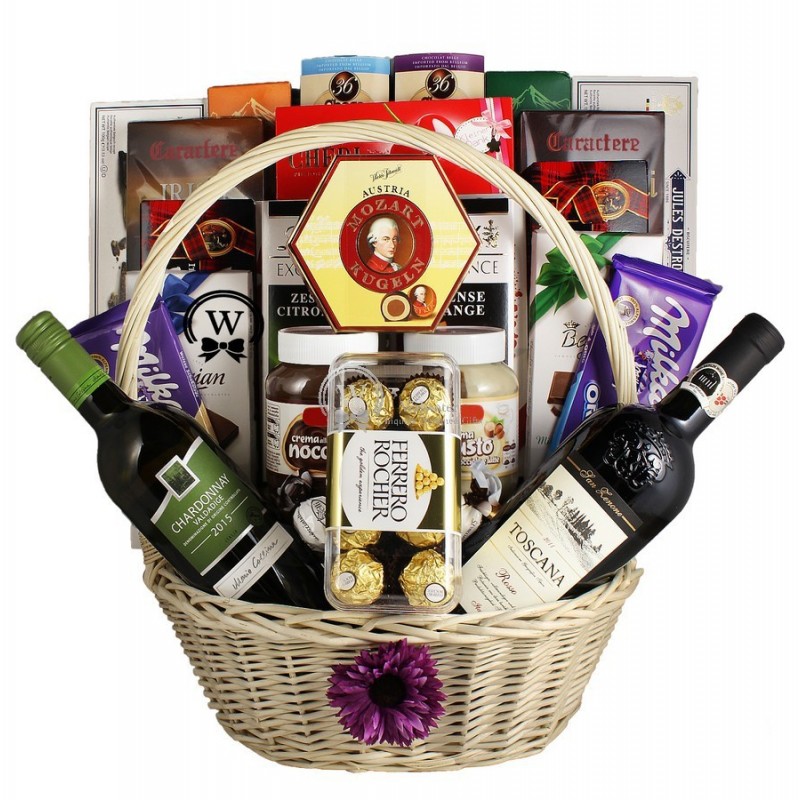
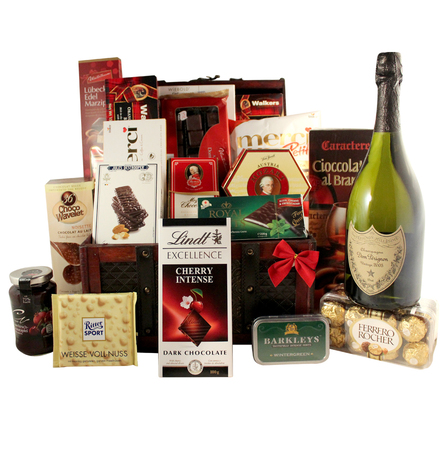
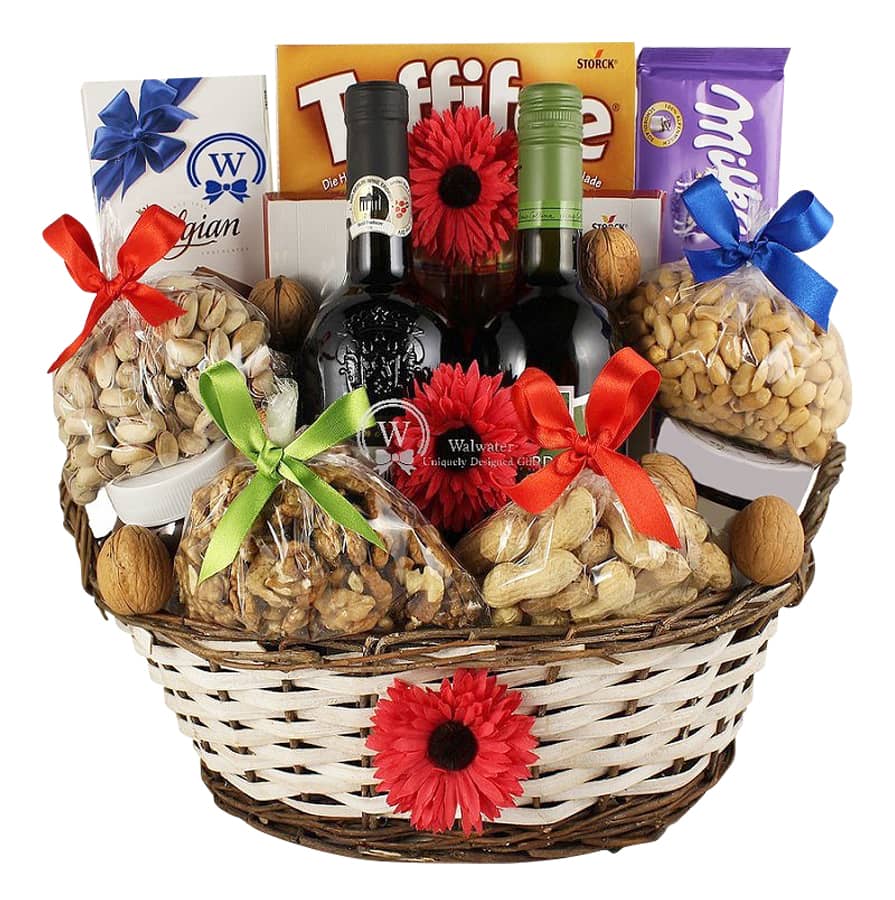
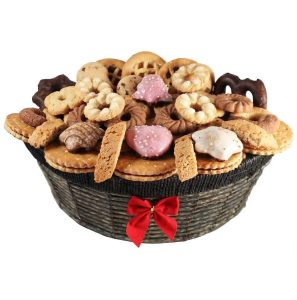
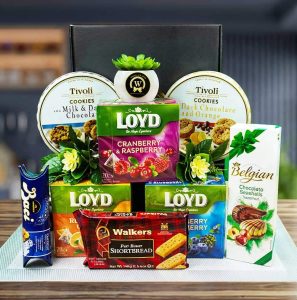
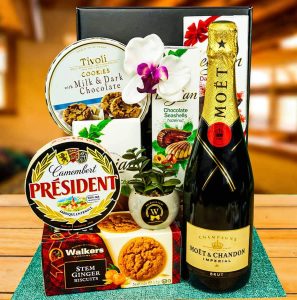
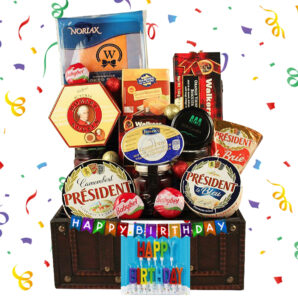
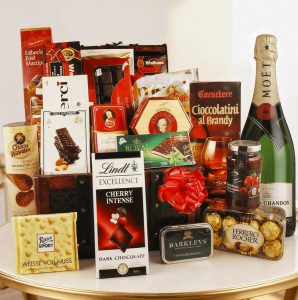
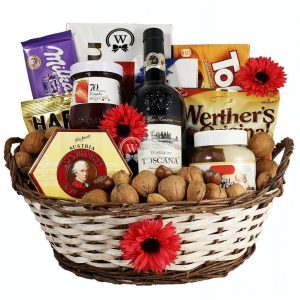
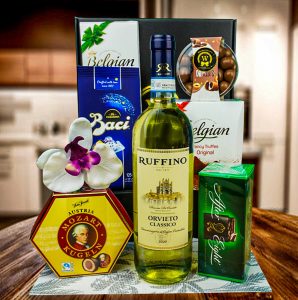
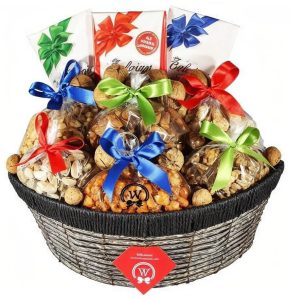
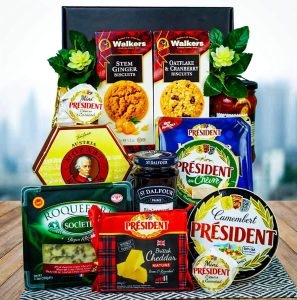
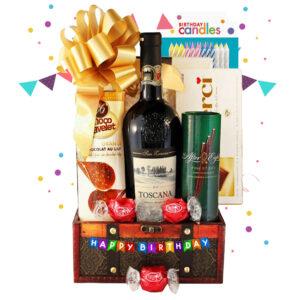
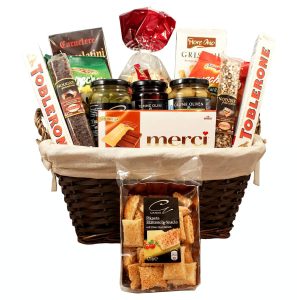
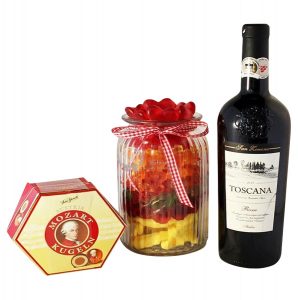
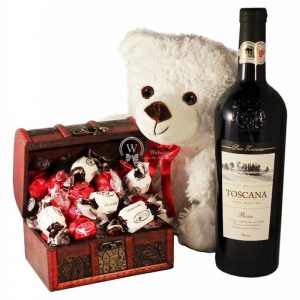
Walwater Gifts' European gift baskets, including its Rosh Hashanah gift baskets, are not kosher certified and should not be described as kosher gift baskets. A Rosh Hashanah name does not prove kosher status. Genuine kosher-certified packaged foods normally carry an authorized certification symbol, called a hechsher, from a recognized kosher agency.
A gift called a “Rosh Hashanah Gift Basket” can easily create the impression that every food inside is kosher.
That assumption is not safe.
Rosh Hashanah describes the occasion for which a gift is designed. Kosher describes compliance with Jewish dietary law and usually requires reliable supervision and certification for commercial food products.
Walwater Gifts does not certify its European gift baskets as kosher.
This guide explains exactly what that means, how recognized kosher labels work, what buyers should check, and how to choose a suitable Rosh Hashanah gift for family members, employees, clients, or business partners in Europe.
Key Takeaways
- Walwater Gifts gift baskets are not kosher certified.
- A basket labeled for Rosh Hashanah is not automatically a kosher gift basket.
- Genuine kosher certification is normally shown through a recognized hechsher or certification mark.
- Individual packaged items may sometimes carry their own manufacturer certifications, but that does not make the entire Walwater Gifts basket kosher certified.
- Walwater Gifts may substitute products when an item is unavailable, making it especially important not to assume a fixed kosher status.
- Buyers sending to observant recipients should ask about kosher requirements before ordering.
- Customers who do not require kosher certification can still choose Rosh Hashanah gifts from Walwater Gifts for supported European destinations.
Are Walwater Gifts Rosh Hashanah Gift Baskets Kosher?
No. Walwater Gifts’ gift baskets are not kosher certified.
This is the most important point for anyone researching kosher gift baskets in Europe.
The company offers gifts designed for Rosh Hashanah celebrations, but the holiday name describes the occasion rather than religious dietary certification.
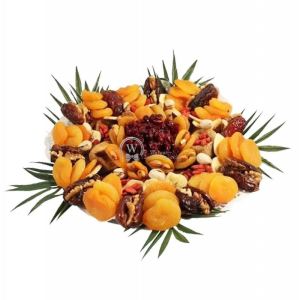
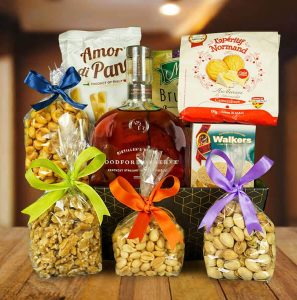
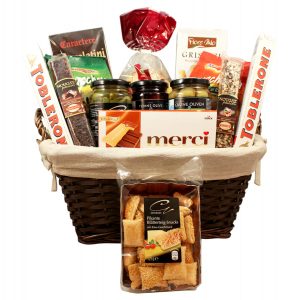
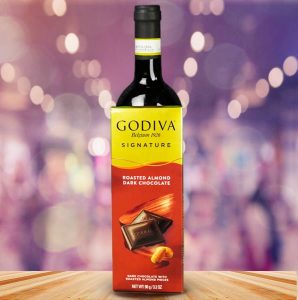
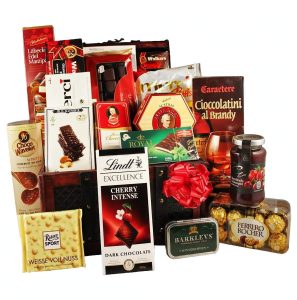
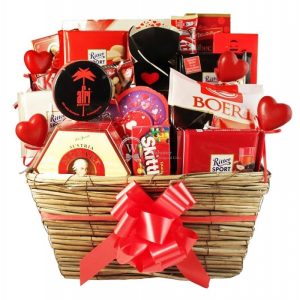
For example, Walwater Gifts currently lists products such as Rosh Hashanah Double Party and Salute Rosh Hashanah Gift Basket. The product pages describe holiday-themed gifts containing branded foods and beverages, but a Rosh Hashanah title itself is not evidence of kosher certification.
Buyers should therefore not:
- Describe the complete basket as kosher
- Promise a recipient that every product is kosher
- Assume the wines are kosher
- Assume preparation or packing follows kosher supervision
- Assume substitutions will maintain any certification found on an individual item
This clarity is particularly important when sending a gift to someone who strictly observes kashrut.
Does “Rosh Hashanah Gift Basket” Mean “Kosher Gift Basket”?
No.
Rosh Hashanah and kosher describe two different things.
Rosh Hashanah identifies a Jewish holiday and the occasion for the gift.
Kosher describes foods and food preparation that meet Jewish dietary laws.
A chocolate hamper can be marketed as a Rosh Hashanah present because its sweetness suits the holiday theme. A wine gift can be presented as a Jewish New Year celebration gift. Neither description confirms kosher certification.
The same distinction applies to Christmas, Easter, Ramadan, birthday, wedding, and anniversary gifts. An occasion name tells you why someone might send the product. It does not establish religious dietary status.
For observant recipients, the certification must be checked separately.
What Does Kosher Certified Actually Mean?
Kosher certification means a recognized rabbinic certification organization has verified that a product and its production meet the organization’s kosher requirements.
The Orthodox Union explains that certification involves reviewing ingredients, production facilities, equipment, and manufacturing processes. A certification mark then tells consumers that the product has been approved under that agency’s supervision.
KLBD describes a hechsher as a kosher accreditation shown through a logo or stamp on a qualifying product or ingredient.
That means kosher status involves more than reading an ingredient list.
A food could appear to contain only simple ingredients but still raise questions about:
- Processing
- Production equipment
- Shared manufacturing lines
- Dairy or meat derivatives
- Flavourings
- Wine or grape ingredients
- Production supervision
For someone who keeps kosher strictly, a reliable certification mark matters.
What Is a Hechsher?
A hechsher is a mark showing that a product has been certified by a kosher certification authority.
You may see the mark printed beside the ingredients, nutritional panel, product name, or another part of the packaging.
Chabad advises consumers to inspect packaged-food labels for recognized kashrut symbols and to check certification information when eating in restaurants or hotels.
Different organizations use different symbols.
Two well-known examples are:
- OU, issued by Orthodox Union Kosher
- KLBD, issued by the London Beth Din’s kosher certification division
KLBD describes itself as a major European kosher certification agency, while the Orthodox Union operates an international certification program covering products manufactured in many countries.
There are many other recognized kosher authorities.
A recipient may also have personal preferences about which certifications they accept.
How Are Kosher Products Labeled?
Certified products usually display the certifying agency’s logo.
The exact letters beside the symbol can provide additional information.
For example, Orthodox Union explains several common variations.
OU
A plain OU symbol identifies a product certified as kosher under Orthodox Union standards and classified as neither meat nor dairy under that certification.
OU-D
The “D” indicates dairy status or production involving dairy equipment under the certification rules.
OU-Meat
This indicates kosher meat status or relevant meat production conditions.
OU-F
The symbol identifies a certified product with fish ingredients.
OU-P
The “P” indicates kosher for Passover under the certifier’s rules.
This illustrates why buyers should look at the full certification mark instead of simply searching the front of the package for the word “kosher.”
Different certifying agencies use their own logos and classification systems.
Is “Kosher for Passover” the Same as Ordinary Kosher?
No.
Kosher for Passover is a more specific certification category.
A product may be kosher throughout the year but not meet Passover requirements.
Orthodox Union explains that its “P” designation is used for products certified for Passover. Chabad likewise notes that major kosher agencies often use a “P” alongside their certification mark for Passover-approved products.
This matters because holiday certification terms should not be used loosely.
Rosh Hashanah does not require a separate “kosher for Rosh Hashanah” certification in the way Passover introduces special food restrictions.
A product is either acceptable under the recipient’s normal kosher standards, or it is not.
Can an Individual Product Be Kosher Even if the Gift Basket Is Not?
Potentially, yes.
A packaged chocolate, biscuit, or another branded item may independently carry a recognized kosher certification on its manufacturer’s packaging.
However, this does not mean the complete Walwater Gifts basket is kosher certified.
There are several reasons.
First, certification applies to the specific product that carries the mark.
Second, different items in one basket may have different certification status.
Third, Walwater Gifts product pages explain that substitutions may be made when a particular brand is unavailable. A substitute can therefore differ from the product originally pictured or listed.
Fourth, the overall basket preparation is not presented by Walwater Gifts as a kosher-certified production process.
For these reasons, buyers should treat the full gift as non-kosher-certified, even if they happen to recognize a certification symbol on one individual packaged item.
Why Substitutions Matter for Kosher Buyers
Product substitutions are common in gift-basket businesses because branded foods may become unavailable.
Walwater Gifts product pages state that another branded item of equal or greater value may replace an unavailable item to support timely delivery.
For most customers, this is mainly a question of brand or flavor.
For someone keeping kosher, it can be far more important.
Suppose the originally pictured chocolate happens to carry a certification symbol. A substitute chocolate might use another certification or no certification at all.
That means a buyer cannot safely reason:
“The chocolate shown on the website is certified, so the basket will be kosher.”
The correct conclusion is:
Walwater Gifts does not certify the basket as kosher, and substitutions mean individual product status should not be relied upon in advance.
Is European Food Labeling the Same as Kosher Labeling?
No.
Ordinary European food labels provide information such as ingredients, allergens, nutritional details, and other required consumer information. Kosher certification is a separate religious certification process.
A normal ingredients label does not tell an observant consumer everything needed to establish kosher status.
A product may look vegetarian or contain no obvious pork or shellfish and still require certification because kosher law also concerns ingredients, production equipment, and processing. Orthodox Union specifically describes certification as covering ingredients, production facilities, tools, machinery, and production methods.
For this reason, shoppers looking for kosher-certified food gifts should search for a recognized certification mark, not only an acceptable-looking ingredient list.
Can I Identify Kosher Food by Reading the Ingredients?
Not reliably in every case.
Reading ingredients is useful for allergies and dietary preferences, but it is not a replacement for kosher certification when the recipient requires certified food.
Commercial foods can contain:
- Flavouring agents
- Emulsifiers
- Processing aids
- Dairy derivatives
- Grape derivatives
- Ingredients made on shared equipment
A kosher certification agency reviews more than the words printed in the ingredient panel.
For a recipient who keeps kosher strictly, use the certification symbol as the starting point.
When there is uncertainty, ask the recipient what standard they require.
Is Wine Automatically Kosher?
No.
Ordinary wine should not be assumed to be kosher.
Wine has particular importance within kosher law, and kosher wine requires appropriate production and supervision.
Therefore, a bottle of red wine, white wine, Champagne, whisky, or another alcoholic beverage in a Walwater Gifts hamper should not be called kosher unless its certification has been separately verified.
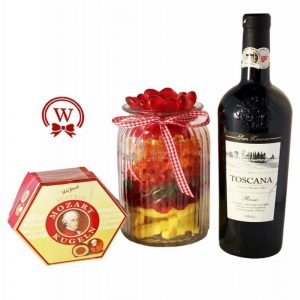
This is important for products such as Rosh Hashanah Double Party, which currently features wine as part of the presentation, and Salute Rosh Hashanah Gift Basket, which also uses wine as part of its celebratory theme.
The correct marketing language is “Rosh Hashanah gift,” not “kosher Rosh Hashanah gift.”
Is Whisky Automatically Kosher?
Whisky should also not be described as kosher simply because of its category or brand.
Different recipients follow different standards regarding whisky production, cask history, ingredients, and certification.
Walwater Gifts currently offers the Glenmorangie Gift Hamper as a whisky-focused gift for different celebrations. The product is a general gift hamper and should not be presented as a kosher-certified product.
For a recipient who requires kosher-certified alcohol, ask what certification or products they accept before making a choice.
What Should I Ask a Recipient Who Keeps Kosher?
The safest approach is a short and respectful question.
You do not need to ask for a detailed explanation of the recipient’s religious practice.
Ask:
“We would like to send you a Rosh Hashanah gift. Do you require all food and beverages to carry kosher certification?”
A second question may be useful:
“Are there particular kosher certifications you prefer?”
This protects the surprise while preventing an unsuitable gift.
For a business contact, you might say:
“We are arranging a holiday gift for you. Could you let us know whether you require a kosher-certified option?”
The recipient can give you the practical information needed without discussing personal beliefs in detail.
When Should You Avoid Sending a Walwater Gifts Basket?
Do not send a standard Walwater Gifts food or alcohol basket when the recipient has clearly told you that all items must be kosher certified.
Walwater Gifts gift baskets are not kosher certified.
In that situation, choose a specialist kosher supplier that can verify:
- The certification authority
- The exact certification status
- The individual products
- The packing process
- Any wine certification
- Any dairy or meat classification
- Substitution rules
Accuracy is more respectful than sending an attractive gift the recipient cannot use.
Walwater Gifts can be suitable when the recipient does not require kosher certification and enjoys the selected food or beverage gift.
Comparing Different Gift Requirements
Recipient Requirement | Is a Standard Walwater Gift Suitable? | What to Check |
No kosher requirement | Potentially yes | Preferences and allergies |
Prefers Jewish New Year theme | Potentially yes | Occasion and message |
Requires certified packaged foods | Not as a complete basket | Use specialist certified supplier |
Strictly kosher household | Not recommended | Exact accepted certification |
Client with unknown requirements | Ask first | Kosher, alcohol, allergies |
Employee with no alcohol preference known | Choose carefully | Consider alcohol-free option |
The key is not to gu
Walwater Gifts Rosh Hashanah Gift Ideas
The following products can be considered Rosh Hashanah celebration gifts for recipients who do not require kosher certification.
They should not be promoted as kosher-certified gift baskets.
What About Rosh Hashanah Gifts for Employees?
Businesses should not assume that every Jewish employee has the same level of observance. Some employees may require reliable kosher certification. Others may not keep kosher at all.
Some may avoid alcohol. Others may prefer not to receive a religiously themed food gift from an employer.
A simple opt-in process works well:
- Ask whether the employee would like a Rosh Hashanah gift.
- Ask whether certified kosher food is required.
- Ask about alcohol.
- Ask about serious allergies.
- Offer another option when the standard gift is unsuitable.
When kosher certification is required, use a specialist certified source rather than describing a Walwater Gifts basket as kosher.
What About Kosher Gifts for Jewish Clients?
Business buyers should be especially careful with client gifts. A client may appreciate recognition of Rosh Hashanah but have strict dietary requirements.
Instead of guessing, ask the client’s assistant, office manager, procurement contact, or the recipient directly.
A useful message could be:
“We would like to send a small Rosh Hashanah gift to your team. Do you require a kosher-certified option, and is alcohol appropriate?”
This is practical and professional.
If certification is required, choose a specialist provider.
If the client confirms that kosher certification is not necessary, a Walwater Gifts Rosh Hashanah hamper may be considered according to their other preferences.
How to Choose a Rosh Hashanah Gift for Europe
1. Ask About Kosher Requirements
Confirm whether the recipient requires certified kosher products.
2. Check Alcohol Preferences
Do not assume wine, Champagne, or whisky is suitable.
3. Choose the Delivery Country
Confirm that the selected Walwater Gifts product is available for the destination.
4. Review the Product Carefully
Remember that a Rosh Hashanah title does not mean kosher certified.
5. Add a Holiday Greeting
Include a message such as “Shanah Tovah” or “Wishing you a sweet and happy New Year.”
6. Confirm the Address
Use the recipient’s full name, street, building number, postal code, city, country, and phone number.
7. Review Timing
Rosh Hashanah 2026 begins at sundown on Friday, September 11, and ends after nightfall on Sunday, September 13. Plan delivery before the holiday begins.
8. Follow Tracking
Check tracking after dispatch where available and respond quickly to courier questions.
Why Does Delivery Timing Matter in 2026?
Rosh Hashanah begins before sundown on Friday, September 11, 2026, and ends after nightfall on Sunday, September 13, 2026.
For a gift intended for the holiday, delivery should ideally happen before Friday afternoon.
Walwater Gifts product pages show different standard delivery periods depending on destination. They also state that weekends are not included as working days and that remote-area charges may apply. Some pages mention possible next-working-day express delivery for qualifying orders placed before the stated cut-off.
Delivery terms, stock, costs, and timing should be checked again when placing the order.
Do not promise an exact holiday delivery date unless it has been confirmed.
How Walwater Gifts Can Help
Walwater Gifts helps international customers order personal and corporate gifts for supported European destinations.
Customers in the USA, Canada, the UK, Australia, and other countries can order gift baskets for occasions such as Rosh Hashanah, birthdays, thank-you moments, employee appreciation, client gifting, and business celebrations.
Customers can include a message printed on a designed greeting card. Tracking is provided after dispatch where available.
Walwater Gifts does not offer its gift baskets as kosher-certified gifts.
That distinction should be considered before ordering for an observant recipient.
For recipients who do not require kosher certification, buyers can review available Rosh Hashanah, gourmet, wine, whisky, chocolate, and other gift choices through Walwater Gifts.
Availability depends on the destination and selected gift.
Common Mistakes to Avoid
Assuming “Rosh Hashanah” Means Kosher
It does not. The holiday name describes the occasion.
Calling Walwater Gifts Baskets Kosher
Walwater Gifts gift baskets are not kosher certified.
Checking Only One Packaged Product
One certified item does not establish the status of the complete basket.
Ignoring Substitutions
A replacement product may have a different certification status. Walwater Gifts product pages state that branded substitutions can occur.
Assuming Vegetarian Means Kosher
Vegetarian and kosher are different dietary standards.
Assuming Wine Is Kosher
Wine requires separate consideration and should not be described as kosher without verification.
Assuming Every Jewish Recipient Keeps Kosher
Jewish practice varies. Ask when it matters.
Guessing Which Certification a Recipient Accepts
Different households may rely on different certification authorities.
Sending Alcohol Without Checking
Personal preference, age, religious practice, and company policy can all matter.
Waiting Until the Holiday Begins
Plan delivery before Rosh Hashanah starts.
Final Kosher Gift Checklist
Before sending a Jewish New Year gift to Europe, confirm:
- Does the recipient require kosher certification?
- Which certification do they accept?
- Does every food need certification?
- Is certified kosher wine required?
- Is alcohol suitable?
- Are there allergies or dietary restrictions?
- Is the gift basket itself certified?
- Could product substitutions occur?
- Is the selected European destination supported?
- Is the address complete?
- Is the recipient available?
- Will the gift arrive before Rosh Hashanah?
- Does the greeting correctly identify the occasion?
- Have you avoided calling a non-certified basket kosher?
For Walwater Gifts orders, remember the most important point:
Walwater Gifts gift baskets are not kosher certified.
Frequently Asked Questions
Are Walwater Gifts gift baskets kosher certified?
No. Walwater Gifts gift baskets are not kosher certified. This includes gifts marketed for Rosh Hashanah. The holiday name describes the occasion for the gift and should not be interpreted as proof of kosher certification.
Are Walwater Gifts Rosh Hashanah baskets kosher?
Walwater Gifts Rosh Hashanah baskets should not be described as kosher. They are designed as gifts for the Jewish New Year, but the complete baskets do not carry kosher certification. Buyers with strict kosher requirements should use a specialist certified supplier.
How do I know whether packaged food is kosher certified?
Look for an authorized kosher certification symbol, known as a hechsher, on the packaging. Chabad recommends checking packaged-food labels for recognized kashrut symbols. Certification agencies such as Orthodox Union and KLBD use their own distinctive marks.
What does the OU symbol mean on food?
The plain OU symbol identifies a product certified as kosher under Orthodox Union supervision. Variations provide more information. OU-D relates to dairy status, OU-Meat identifies meat status, OU-F relates to fish, and OU-P identifies products certified for Passover.
What is a kosher certification symbol called?
A kosher certification mark is commonly called a hechsher. KLBD describes a hechsher as kosher accreditation shown through a logo or stamp on a qualifying product or ingredient. Different kosher certification agencies use different symbols.
Can an item inside a non-kosher-certified basket have a kosher symbol?
An individual packaged item may independently carry kosher certification, but that does not certify the complete gift basket. Walwater Gifts also permits substitutions when particular branded products are unavailable, so buyers should not rely on the status of one pictured item.
Does a Rosh Hashanah label mean that food is kosher?
No. Rosh Hashanah identifies the Jewish New Year and the occasion for the product. Kosher status requires separate verification. A product called a Rosh Hashanah basket can still be non-kosher-certified.
Is regular wine kosher?
Regular wine should not automatically be treated as kosher. Kosher wine involves specific religious requirements and supervision. Buyers sending wine to an observant recipient should verify the exact bottle’s certification rather than assuming that any wine used for Rosh Hashanah is suitable.
Are whisky gift hampers kosher?
A whisky gift hamper should not be described as kosher unless the relevant products and full presentation have been verified. The Walwater Gifts Glenmorangie Gift Hamper is not a kosher-certified gift hamper.
Can I send a Walwater Gifts basket to someone who keeps kosher?
You should first ask what the recipient requires. If they need a fully kosher-certified gift, a standard Walwater Gifts basket is not suitable because the baskets are not kosher certified. If certification is not required, you can consider available gifts based on their preferences.
What should I send a Jewish client if I do not know their kosher requirements?
Ask before ordering. A simple question such as “Do you require a kosher-certified gift?” avoids assumptions. Also ask whether alcohol is appropriate. If the client requires full certification, choose a specialist kosher supplier.
Can I send a Rosh Hashanah gift to Europe from the USA?
Customers in the USA can order Walwater Gifts products for supported European destinations. However, Walwater Gifts Rosh Hashanah gift baskets are not kosher certified. Check the recipient’s dietary needs, destination availability, and current delivery terms before ordering.
When should a Rosh Hashanah gift arrive in 2026?
The gift should ideally arrive before Rosh Hashanah begins at sundown on Friday, September 11, 2026. The holiday continues until after nightfall on Sunday, September 13. Allow extra time for address problems, remote destinations, and courier delays.
Can companies send Rosh Hashanah gifts to employees in Europe?
Companies can arrange Rosh Hashanah gifts for employees, but dietary requirements should be checked first. Do not assume every Jewish employee requires kosher food or that none do. Walwater Gifts baskets are not kosher certified, so employees requiring certification need another suitable option.
Do substitutions affect kosher certification?
Substitutions can affect the status of individual products because the replacement brand may carry different certification. Walwater Gifts product pages state that substitutions may occur when an item is unavailable. This is another reason the complete baskets should not be treated as kosher-certified gifts.
Final Call to Action
Searching for Kosher Gift Baskets Europe requires one important distinction: a Rosh Hashanah-themed gift and a kosher-certified gift are not necessarily the same thing.
Walwater Gifts gift baskets are not kosher certified.
For recipients who require reliable kosher certification, choose a specialist provider that can verify the relevant certification and every product included.
For family members, friends, employees, clients, or business partners who do not require kosher certification, browse the Rosh Hashanah and other personal and business gifts available through Walwater Gifts. Choose the destination, check current availability, and add your printed New Year message during ordering.