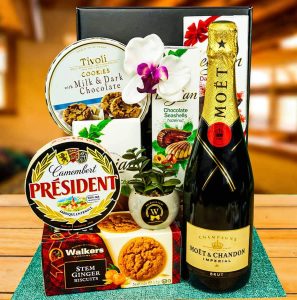
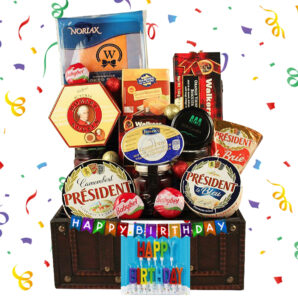
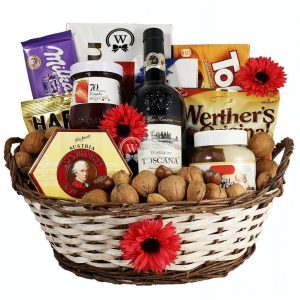
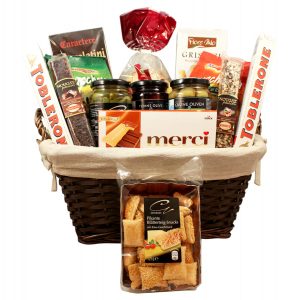
When Walwater Gifts prepares and ships a Rosh Hashanah gift within the European Union to a supported EU destination, the recipient should not normally pay import customs duties upon delivery. The buyer may be in the USA, UK, Canada, or Australia, but that does not make the parcel an overseas import. Customs becomes relevant when goods physically enter the EU from outside its customs territory.
Nobody wants to send a thoughtful Rosh Hashanah gift and leave the recipient with a customs bill.
This concern is especially common among buyers in the United States, United Kingdom, Canada, and Australia. The key question is not where you live.
The important question is where the gift itself is dispatched from and where it is delivered.
A gift ordered online from a European supplier and shipped between European Union countries is very different from a parcel packed in New York, Toronto, London, or Sydney and mailed directly into the EU.
This guide explains the difference, what customs and VAT mean, how non-EU imports are treated, and why European fulfilment can make Rosh Hashanah gifting simpler.
Key Takeaways
- A buyer’s location does not determine whether the recipient pays EU import duty.
- EU member states form a customs union with no customs duties at their internal borders.
- Walwater Gifts prepares and ships gifts within Europe for supported European Union destinations.
- A gift physically mailed from a non-EU country into the EU may face customs, VAT, and other import procedures.
- Since July 1, 2026, qualifying low-value e-commerce imports entering the EU from outside the bloc can also face a temporary €3 customs duty per tariff item.
- European countries outside the EU may have their own import rules.
- Alcohol, food, remote locations, and recipient availability can create delivery issues even when no internal EU customs duty applies.
Why Does the Shipping Origin Matter More Than the Buyer's Location?
Imagine that you live in Boston and want to send a Rosh Hashanah gift to Munich.
There are two very different ways to do it.
Option One: You Pack and Ship the Gift From the USA
The parcel physically leaves the United States and enters the European Union.
That is an import.
Customs authorities may inspect the shipment, require import information, assess VAT or customs duties, and check restrictions on food or alcohol. EU rules define importation as goods moving from outside the European Union into EU customs territory.
Option Two: You Order From a European Gift Company
You remain in Boston, but the gift is already prepared in Europe and dispatched to Germany from within the European Union.
Your American billing address does not transform that European parcel into a US import.
The physical goods are moving within the EU customs area.
This distinction is one of the biggest advantages of buying from a European gift provider when the recipient lives in an EU country.
Are There Customs Duties Between EU Countries?
No customs duties are charged at borders between European Union member states.
The 27 EU member states form a customs union. They apply common customs tariffs to qualifying goods entering from outside the bloc, but goods in free circulation can move between EU countries without additional internal customs duties.
For example, goods moving from one EU member state to:
- Germany
- France
- Italy
- Austria
- Belgium
- Netherlands
- Spain
- Portugal
- Poland
- Czechia
- Slovakia
- Slovenia
- Hungary
- Croatia
- Romania
- Bulgaria
do not cross a normal import customs frontier merely because they cross an EU national border.
The European Commission states that once imported goods have cleared customs at their EU point of entry, they can circulate within the EU without further customs formalities.
Will a Walwater Gifts Recipient Have to Pay Customs?
For a Walwater Gifts order prepared and shipped within the European Union to a supported EU destination, the recipient should not normally receive an import-customs bill simply for receiving the parcel.
That is because the gift is not being imported into the EU by the recipient from the buyer’s home country.
A buyer in Chicago, Toronto, Sydney, or Manchester can place an online order, but the buyer’s location is separate from the physical shipment.
We at Walwater Gifts prepare and ship gifts within Europe for supported EU destinations.
This model is particularly useful for international senders who do not want their recipient dealing with an overseas parcel.
Availability depends on the destination and selected gift.
What About VAT?
VAT and customs duty are different.
Customs duty relates to the movement of goods across customs borders.
Value Added Tax, or VAT, is a consumption tax applied to goods and services under European tax rules.
For sales to final consumers within the European Union, the seller may need to apply VAT according to the relevant EU rules and destination. This is part of the commercial transaction rather than an import-customs demand caused by crossing an internal EU border.
For the gift recipient, the practical point is simple:
An intra-EU Walwater Gifts delivery should not normally result in a courier arriving and demanding import VAT because the buyer lives in America, Canada, Australia, or the UK.
Business VAT invoicing can be different from consumer orders, especially for VAT-registered companies. Corporate buyers should use the appropriate billing details and review the invoice provided for their order.
Does Marking a Parcel as a “Gift” Remove Customs Charges?
Not automatically. This is one of the most common misunderstandings in international gifting.
When a parcel physically enters a country from outside its customs territory, calling it a gift does not automatically eliminate customs procedures.
The European Union does provide specific relief for some private-to-private, non-commercial gifts up to certain limits. EU customs guidance refers to relief for qualifying private-to-private consignments up to €45.
But this should not be confused with an online purchase.
If you buy goods from a commercial business outside the EU and have that business send them to your friend, client, or employee, the parcel is not simply transformed into a private gift shipment because the purpose is generous.
Commercial e-commerce imports follow their applicable import rules.
What Changed for Low-Value EU Imports in July 2026?
There has been an important recent change.
From July 1, 2026, the European Union introduced a temporary customs duty of €3 per tariff item for qualifying low-value distance-sale consignments worth up to €150 that are imported into the EU from outside the bloc.
The change is designed to replace the previous low-value customs duty exemption for these e-commerce imports.
This matters if you buy a Rosh Hashanah gift from a seller outside the European Union and that seller physically ships the products into the EU.
It does not create an internal customs duty on goods already moving within the EU customs territory.
That makes the shipping origin even more important in 2026.
Does the New €3 Duty Apply to Walwater Gifts EU Deliveries?
The new low-value import measure applies to qualifying goods imported from outside the European Union.
It is not an internal customs tariff on goods moving normally between EU member states.
Walwater Gifts prepares and ships gifts within Europe for supported EU destinations.
Therefore, an ordinary gift moving through the EU fulfillment route is fundamentally different from an e-commerce parcel entering the EU directly from the United States, China, Australia, or another non-EU country.
What Happens If I Send the Gift Myself From the USA?
A gift physically posted from the United States to a European Union destination becomes an international import shipment.
The parcel may require:
- Customs documentation
- A declared value
- Accurate product descriptions
- Import VAT
- Customs duties where applicable
- Food-related checks
- Alcohol-related controls
- Courier clearance fees
Customs authorities use information such as the shipment’s contents, declared value, and origin to determine the applicable treatment.
DHL explains that customs authorities in the destination country determine applicable duties and taxes based on shipment and customs information.
The recipient may be asked to pay if the sender has not arranged another method of settling those charges. That is not the experience most people want to create with a holiday gift.
What If I Send the Gift From Canada or Australia?
The principle is similar. Canada and Australia are outside the European Union.
A parcel physically entering EU customs territory from either country must go through the applicable import process.
Even when the package is intended as a Rosh Hashanah present, customs authorities assess it according to the legal import rules that apply to the shipment.
Buying through a European fulfillment company avoids the need for your personal parcel to travel from Canada or Australia into the EU.
What About Sending Gifts From the UK to the EU?
Great Britain is outside the European Union customs territory following Brexit.
Goods moving between Great Britain and the EU are therefore subject to customs procedures that did not apply when the UK was an EU member state.
The European Commission confirms that customs declarations are required when importing or exporting goods between Great Britain and the European Union. Additional formalities can apply to excise products such as alcohol.
This makes a significant difference for British buyers.
Ordering a gift online from your home in London does not mean the gift must physically ship from Britain.
When you order from Walwater Gifts for a supported EU destination, the gift can be prepared and shipped within Europe instead.
Do European Countries Outside the EU Follow the Same Rules?
No.
Europe and the European Union are not identical.
Countries such as Switzerland, Norway, the United Kingdom, Serbia, and others are European but are not EU member states.
Their customs relationships with the European Union vary. Therefore, the statement “no customs between EU countries” should never be rewritten as “no customs anywhere in Europe.”
For a non-EU European destination, check the exact country, product, shipping origin, and current customs arrangements. Walwater Gifts availability also depends on the destination and selected product.
Does Alcohol Change the Customs Situation?
Alcohol deserves extra attention.
Within a normal EU delivery route, the issue is different from importing a privately packed bottle from overseas.
When alcohol crosses an external customs border, excise rules and additional customs requirements may apply. The European Commission specifically notes additional formalities for excise goods, including alcohol, when goods move between Great Britain and the EU.
A privately packed wine or whisky parcel from outside the European Union can therefore be much more complicated than ordering an established gift available through a European provider. Adult signature rules may also apply depending on the destination and carrier. Always confirm alcohol suitability for the recipient before ordering.
What About Food in Rosh Hashanah Gift Baskets?
Food products can also face additional controls when imported through an external EU border.
The European Union’s customs system works alongside health, food-safety, animal-health, and other regulatory controls. Some products of animal origin can be subject to additional checks when entering EU territory.
This is another reason not to assume that packing your own gourmet basket overseas is the easiest solution. Commercial gift companies can select products suited to their established delivery network.
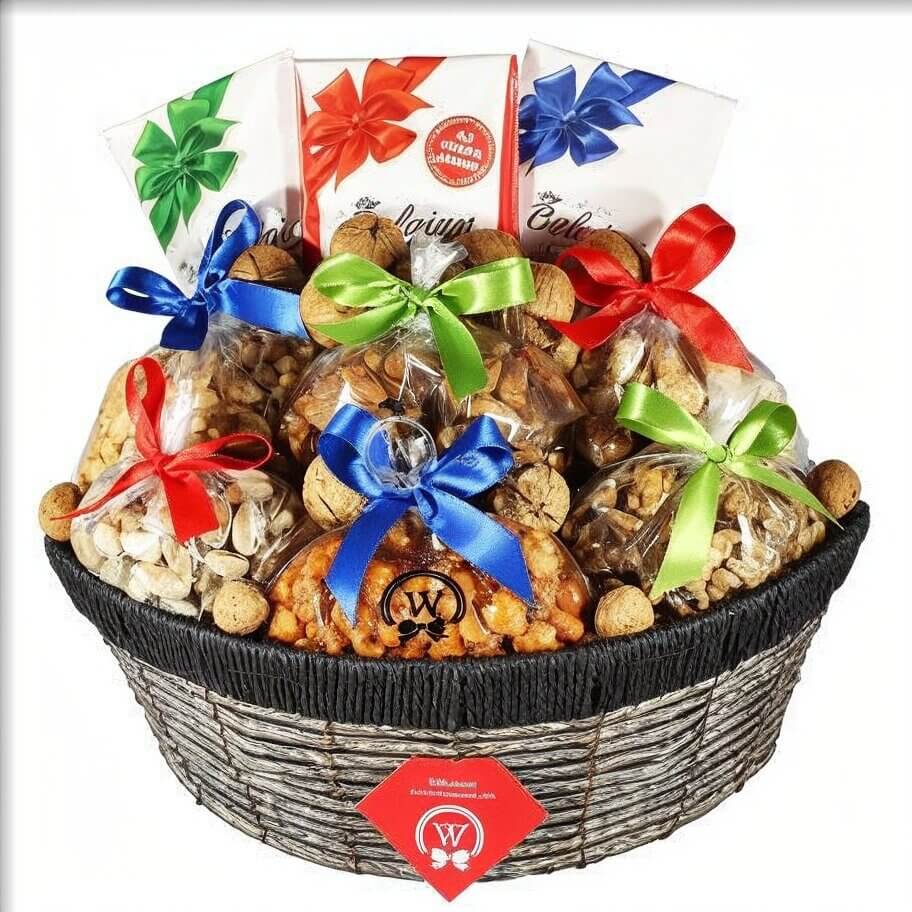
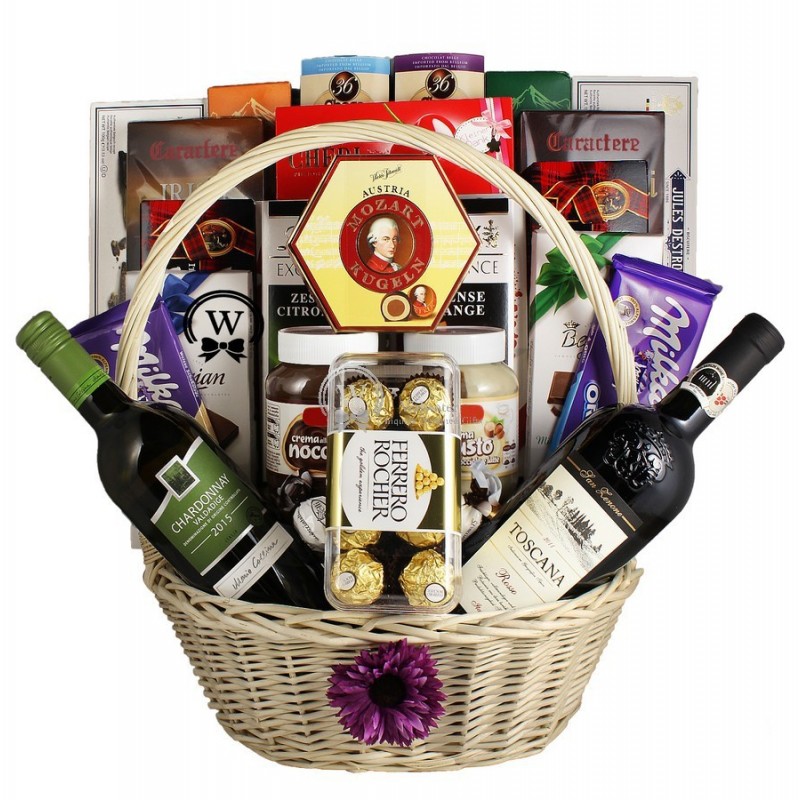
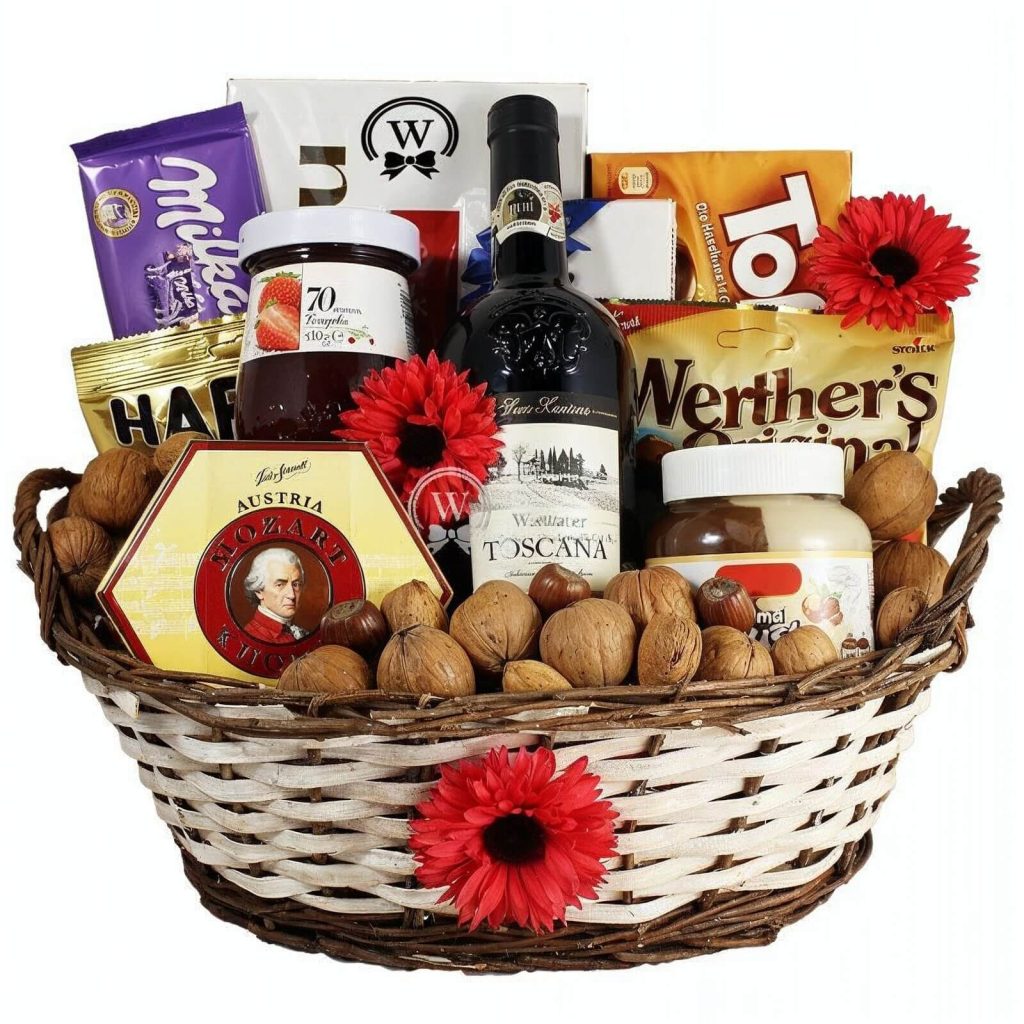
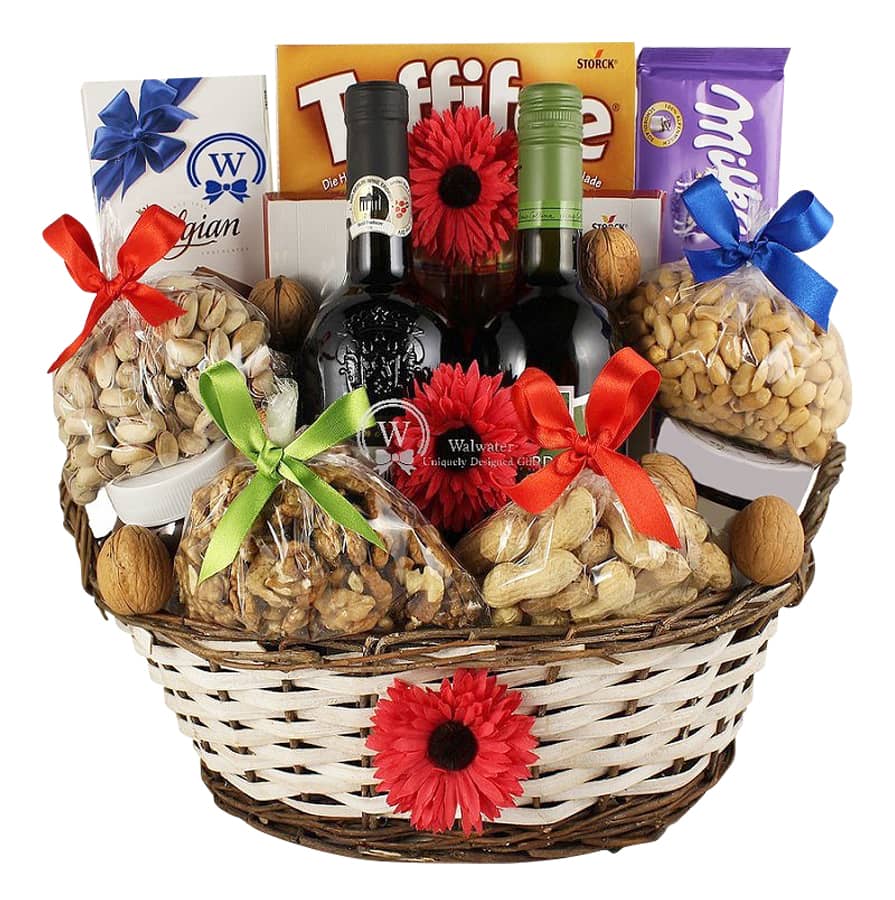
Recommended Rosh Hashanah Gifts From Walwater Gifts
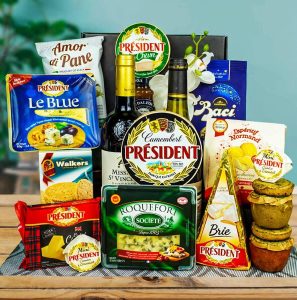
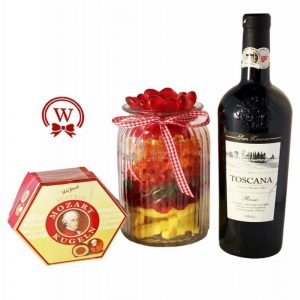
These gifts may be considered for recipients who do not require kosher certification. Walwater Gifts gift baskets are not kosher certified. Availability depends on the destination and current stock.
Personal Gifts Versus Corporate Rosh Hashanah Orders
Order Type | Main Customs Question | Best Approach | Recipient Concern |
EU-based personal delivery | Is the parcel staying inside EU customs territory? | Use European fulfilment | Usually no import customs bill |
EU corporate gift | Is delivery intra-EU? | Confirm destination and invoice | VAT treatment may vary |
Parcel mailed from USA | Does it enter EU customs territory? | Prepare import documents | Charges may arise |
Parcel mailed from UK | Is it entering the EU from Great Britain? | Customs rules apply | Charges or clearance may arise |
Non-EU European destination | What are local import rules? | Check country individually | Customs may apply |
How to Send a Rosh Hashanah Gift to Europe Without Creating a Customs Surprise
1. Choose the Recipient’s Country
First determine whether the destination is inside the European Union.
2. Check the Shipping Origin
Do not focus only on your billing address. Ask where the physical parcel will be dispatched from.
3. Prefer EU Fulfillment for EU Recipients
A gift already moving within the EU customs territory avoids the normal import customs process that applies when goods enter from outside.
4. Select an Available Gift
Check the product’s availability for the destination.
5. Confirm Dietary and Alcohol Preferences
Rosh Hashanah gifts may contain wine or gourmet foods. Remember that Walwater Gifts baskets are not kosher certified.
6. Enter the Complete Address
Provide the recipient’s name, street, building number, postal code, city, country, and telephone number.
7. Add Your Holiday Message
A simple greeting such as “Shanah Tovah. Wishing you and your family a sweet and peaceful New Year” works well.
8. Review Delivery Terms
Check stock, timing, delivery charges, remote-area conditions, and available tracking before placing the order.
Will Corporate Gift Recipients Pay Import Tax?
For corporate gifts shipped within the European Union to an EU destination, crossing from one EU country into another does not itself trigger an import customs duty.
Corporate VAT treatment can be more complex.
A business-to-business transaction involving a VAT-registered company may be invoiced differently from a consumer order. EU guidance explains that cross-border VAT rules depend on whether the customer is a business or final consumer and on the specific transaction.
Corporate buyers should therefore provide correct company and VAT information when required. That accounting issue is different from a courier demanding import duty from the gift recipient.
What Address Problems Can Delay a Customs-Free Gift?
Avoiding customs does not guarantee a perfect delivery.
A parcel can still be delayed because of:
- Wrong postal code
- Missing building number
- Missing apartment number
- Incorrect recipient name
- Outdated office address
- Missing phone number
- Closed reception
- Recipient travelling
- Remote location
- Public holiday
- Incorrect access details
For a Rosh Hashanah delivery, confirm the recipient’s availability before the holiday begins.
A gift arriving after the celebration loses much of its timing value even when there are no customs problems.
When Should Rosh Hashanah Gifts Arrive in 2026?
Rosh Hashanah 2026 begins at sundown on Friday, September 11, 2026, and continues through Sunday, September 13, 2026.
For a physical gift, plan for arrival before the holiday starts. A Wednesday or Thursday delivery gives the recipient useful extra time and leaves room for a delivery issue.
Do not rely on a final Friday delivery unless the timing has been specifically confirmed. Delivery dates and costs should be confirmed during checkout.
Why European Fulfillment Can Be Easier for Overseas Buyers
International buyers often think they need to ship themselves internationally. They do not. You can live thousands of kilometers from your recipient while ordering from a company close to the delivery market.
For EU destinations, that approach can reduce:
- External customs procedures
- Import documentation
- International border delays
- Recipient duty requests
- Complications with food
- Complications with alcohol
- Long transport routes
The buyer still enjoys the ability to choose the gift and write the message from abroad. The physical parcel simply starts closer to the recipient.
How Walwater Gifts Can Help
Walwater Gifts helps customers outside Europe order personal and corporate gifts for delivery to supported European destinations. Customers can place orders from the USA, Canada, the United Kingdom, Australia, and other countries.
For supported European Union destinations, gifts are prepared and shipped within Europe. Because EU member states do not impose customs duties at their internal borders, this avoids the normal import-duty situation created when a parcel physically enters the EU from a non-EU country.
Customers can add a message printed on a designed greeting card. Tracking is provided after dispatch where available.
Business buyers can also ask about employee, client, partner, and larger corporate orders. Availability, stock, delivery timing, delivery charges, and destination conditions should be checked before ordering.
Browse options to send Rosh Hashanah gifts across Europe with Walwater Gifts.
Common Mistakes to Avoid
Assuming the Buyer’s Country Determines Customs
The shipping origin of the physical goods matters.
Mailing a Basket From Overseas Without Checking Import Rules
Food and alcohol can create additional problems.
Thinking the Word “Gift” Removes All Taxes
Commercial online purchases do not automatically receive private gift relief.
Confusing Europe With the European Union
Not every European destination is inside the EU customs union.
Forgetting About the 2026 Low-Value Import Change
Qualifying e-commerce goods imported into the EU from outside it can now face the temporary €3-per-item customs duty.
Assuming VAT and Customs Duty Are the Same
They are separate concepts.
Sending Alcohol Without Checking
Alcohol can involve excise and age-related requirements.
Ignoring the Recipient’s Dietary Requirements
Walwater Gifts Rosh Hashanah baskets are not kosher certified.
Waiting Until the Last Delivery Day
Order early enough to handle address or courier problems.
Final Customs Checklist
Before ordering, confirm:
- Is the recipient in an EU member state?
- Where will the physical gift be dispatched from
- Will the parcel stay within EU customs territory?
- Is the selected product available for the destination?
- Is the recipient’s address complete?
- Does the phone number include the country code?
- Is alcohol suitable?
- Does the recipient require kosher certification?
- Are there dietary or allergy concerns?
- Is the delivery address remote?
- Will someone be available to receive the parcel?
- Is the intended arrival before Rosh Hashanah begins?
- Have current delivery costs been checked?
- Has the buyer distinguished VAT from import customs duty?
- Is the destination outside the EU and therefore subject to separate rules?
-
Frequently Asked Questions
Will my recipient in Europe have to pay customs on a Rosh Hashanah gift?
It depends on where the gift is physically shipped from. For Walwater Gifts orders prepared and shipped within the European Union to supported EU destinations, the recipient should not normally face import customs duties. EU member states do not impose customs duties at their internal borders.
Does it matter that I am ordering from the USA?
Your location in the USA does not automatically create an EU import. What matters is the physical route of the gift. When the gift is prepared within Europe and shipped to an EU destination from inside the EU customs territory, your American billing address does not turn the shipment into a US import.
Can I order from the UK without my EU recipient paying customs?
You can order online from the UK while the physical gift is dispatched within the European Union. This differs from personally mailing a parcel from Great Britain, which requires customs procedures when entering the EU.
Are there customs duties between European Union countries?
No customs duties are levied at borders between EU member states. Once goods have entered free circulation in the European Union, they can move between member states without additional internal customs duties.
Is VAT the same as customs duty?
No. VAT is a consumption tax, while customs duty relates to goods crossing customs borders. EU consumer purchases can include VAT even when no import customs duty applies. Cross-border VAT treatment depends on the seller, customer type, and destination.
Will writing “gift” on a parcel avoid EU customs charges?
Not necessarily. EU relief exists for qualifying private-to-private non-commercial gifts under specific conditions, but a commercial online order follows the rules that apply to that transaction. Simply describing a purchased product as a gift does not automatically remove import requirements.
What happens if I mail my own Rosh Hashanah basket from Canada?
A parcel sent physically from Canada enters the European Union as an import when the recipient lives in an EU country. Customs procedures, VAT, duties, food restrictions, and courier clearance charges may apply depending on the shipment.
What changed for low-value EU imports in 2026?
From July 1, 2026, a temporary €3 customs duty per tariff item applies to qualifying low-value distance-sale consignments of up to €150 imported from outside the EU. The measure concerns external imports rather than ordinary goods moving internally between EU member states.
Can alcohol in a Rosh Hashanah gift create customs problems?
Alcohol can create additional requirements when it crosses an external customs border. Excise, customs, and carrier rules may apply. This is especially relevant to gifts shipped into the EU from countries such as the UK, USA, Canada, or Australia.
Do corporate Rosh Hashanah gifts have customs duties?
A corporate gift moving within the EU does not face customs duty merely because it crosses from one EU member state to another. Business VAT invoicing may follow different rules from consumer orders, so companies should provide accurate business and VAT information.
Are Switzerland and Norway covered by the same no-customs rule?
No. The rule discussed here concerns movement within the European Union customs territory. Switzerland and Norway are European countries but are not EU member states. Their customs arrangements must be checked separately.
Can my recipient be charged a courier customs fee?
A courier may charge clearance-related fees when handling an international import that requires customs processing. DHL explains that destination customs authorities determine applicable duties and taxes for international imports. An ordinary intra-EU shipment does not go through the same external import process.
Are Walwater Gifts Rosh Hashanah baskets kosher?
No. Walwater Gifts gift baskets are not kosher certified. Buyers sending to recipients who require kosher certification should use a specialist provider able to verify the certification of the complete gift.
How early should I send a Rosh Hashanah gift in 2026?
Plan delivery before Rosh Hashanah begins at sundown on Friday, September 11, 2026. Earlier arrival gives time to solve address or courier problems. Check the current delivery estimate for the selected product and postal code before ordering.
How can I avoid customs surprises when sending gifts to Europe?
Use a provider that prepares gifts within the destination customs area, check whether the recipient is inside the European Union, and review the exact delivery country. For supported EU destinations, Walwater Gifts prepares and ships gifts within Europe, avoiding the normal external EU import process.
Final Call to Action
Understanding Rosh Hashanah Gift Customs in Europe starts with one simple question: where does the physical gift begin its trip?
For supported European Union destinations, Walwater Gifts prepares and ships gifts within Europe. This means the recipient is not receiving a parcel imported directly from your home country simply because you ordered from the USA, UK, Canada, or Australia.
Browse the available personal and corporate Rosh Hashanah gifts through Walwater Gifts, choose the recipient’s destination, add your printed greeting, and review the current delivery information before ordering.